

Blog Highlights
- Discover how to automate project management workflows using AI-driven tools that connect delivery, resources, and financials in one intelligent ecosystem.
- Learn why enterprise-grade automation is about awareness, governance, and adaptability — not blind task execution.
- See how AI acts as the decision layer in modern project management software, predicting risks, optimizing resources, and aligning financial performance.
- Understand the power of integrations and purpose-built automation for industry-specific efficiency — from IT services to regulated sectors like pharma.
- Explore how intelligent, simple automation drives enterprise-wide adoption, turning project oversight into strategic orchestration.
Most enterprises still run projects through manual follow-ups, spreadsheets, and late-night status calls. The result? Projects move — but not always in the right direction or with measurable predictability.
Automation has evolved from a convenience to the backbone of modern project governance. The future of project management isn’t about tighter control, but about intelligent systems that simplify, predict, and scale with your business.
True automation doesn’t replace human judgment — it removes repetitive work, connects delivery, resources, and financials, and keeps them in sync. Teams gain proactive visibility and agility instead of chasing updates or reworking plans.This blog explores how to automate project management end to end — from planning to financials — and what makes intelligent automation truly transformative for enterprises.
What Project Management Automation?
Most teams think they’ve automated project management because their tool sends reminders or updates dashboards. But that’s not automation — that’s notification.
True automation means digitizing every project process so that execution, collaboration, and control flow seamlessly. It’s about replacing manual follow-ups and approvals with self-moving workflows that keep projects progressing without human bottlenecks.
When automation is built right, your project plan becomes a living system that:
- Adjusts schedules when dependencies change.
- Allocates people based on skills and availability, not guesswork.
- Tracks budgets and billing in real time.
- Surfaces risks before they derail delivery.
The outcome? You move from effort-based management to insight-based management.
Modern project management software achieves this by connecting delivery, resources, and financials on a single digital layer. Every action — from a task update to an invoice — triggers intelligent responses downstream.
That’s what real automation looks like: a connected ecosystem where projects run with precision, decisions happen faster, and managers spend less time controlling work and more time improving outcomes.
Why Enterprises Must Move Beyond Manual Project Management
In a growing enterprise, manual project management doesn’t just slow you down — it compounds risk.
Missed deadlines, unclear accountability, idle resources, and revenue leakage often trace back to fragmented tools and disconnected reporting. Teams spend more time collecting data than acting on it. Finance and delivery operate on different truths. Leaders get visibility only when it’s already too late to course-correct.
This gap between what’s happening and what’s visible is where most project failures begin.
Enterprises can’t afford that anymore — not when margins depend on utilization, delivery timelines, and client satisfaction moving in lockstep.
That’s why automation is no longer optional; it’s strategic.
By digitizing every part of the project lifecycle — from initiation to billing — automation ensures that delivery, resources, and financials operate in perfect sync.
Every project update instantly reflects in forecasts. Every change in scope realigns cost and capacity. Every risk triggers a data-backed alert instead of an escalation email.
Manual systems create lag. Automated systems create foresight.
And foresight is what separates enterprises that deliver predictably from those that constantly firefight.
In short, automation is not about doing less work — it’s about ensuring that the work done always moves the business forward.
The Building Blocks of Project Automation
Project automation isn’t achieved by a single feature or integration. It’s built through a connected framework — where every stage of the project lifecycle talks to the next, ensuring that delivery, resources, and financials move in one rhythm.
Here are the core building blocks that make that possible:
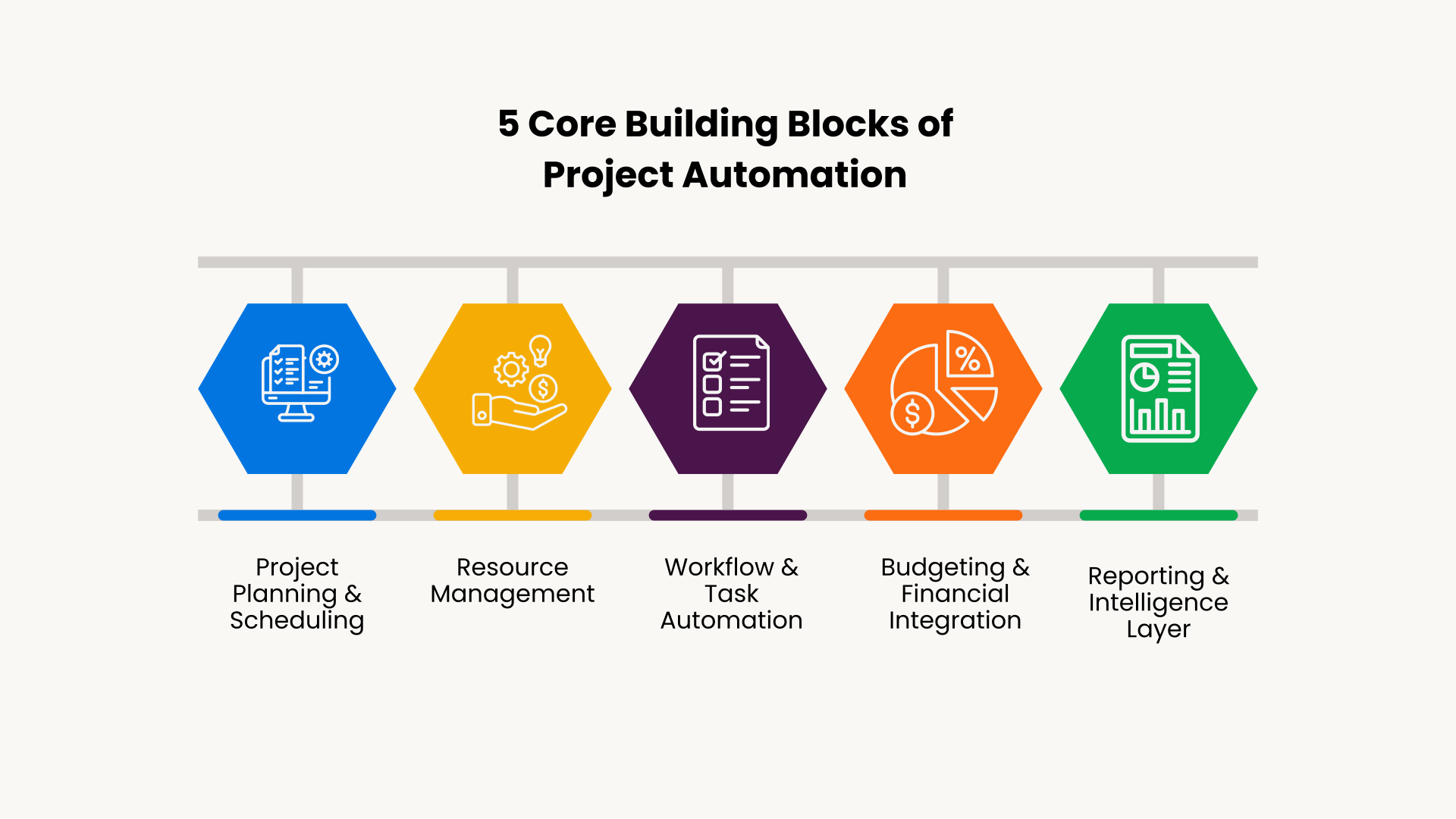
Automating project-management workflows
1. Project Planning & Scheduling
Automation starts at the foundation — planning. Intelligent project management software creates adaptive schedules that auto-adjust when dependencies shift, ensuring no timeline slips unnoticed.
2. Resource Management
Instead of juggling spreadsheets, automation matches people to projects based on real-time skill availability, capacity, and utilization. It prevents both overloading and bench time — the two biggest cost drains.
3. Workflow & Task Automation
Approvals, reminders, and status changes no longer need manual triggers. Automated workflows ensure that when one milestone closes, the next begins seamlessly — eliminating administrative lag.
4. Budgeting & Financial Integration
Automation connects project delivery with cost tracking, expense capture, and billing. This linkage turns financial visibility from a month-end exercise into a real-time view.
5. Reporting & Intelligence Layer
Dashboards powered by AI don’t just show progress — they analyze it. They flag risks, highlight utilization gaps, and recommend corrective actions before issues escalate.
When these blocks operate on a unified digital platform, projects don’t just run smoother — they self-correct, self-report, and scale without chaos.
Intelligent Automation — The AI Advantage
Not all automation is intelligent. Many systems still rely on fixed rules — they follow instructions but can’t adapt when reality shifts. That’s where AI-driven project management software makes a real difference.
AI transforms automation from static to context-aware. It doesn’t just execute workflows; it learns from patterns, outcomes, and project data to make smarter recommendations.
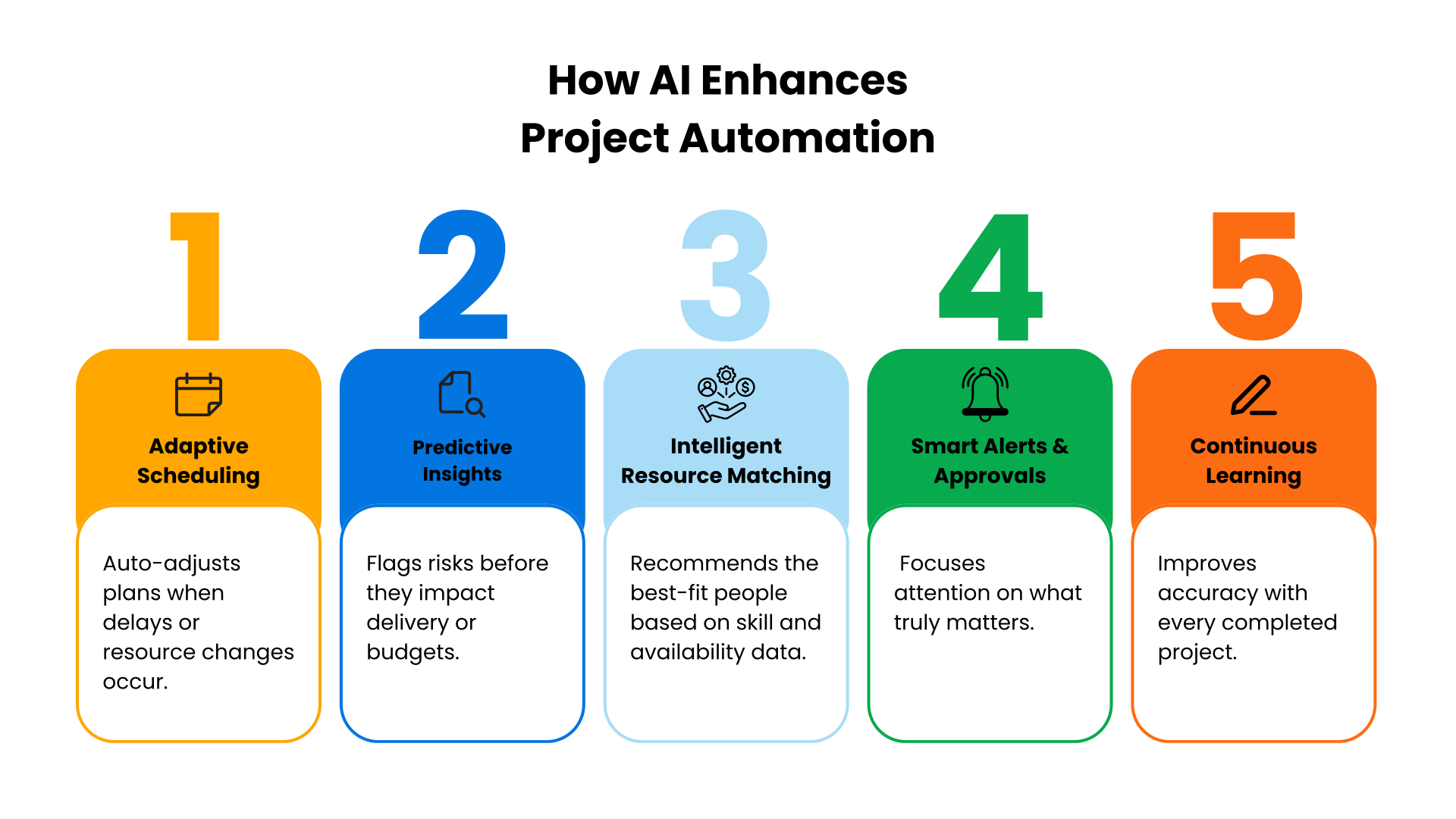
Here’s what that looks like in practice:
- Adaptive Scheduling: When a key task slips, AI auto-adjusts timelines and reallocates resources to maintain delivery without human intervention.
- Predictive Insights: It forecasts project delays, budget overruns, and utilization risks — not after they happen, but before.
- Intelligent Resource Matching: AI scans skill profiles, availability, and project requirements to suggest the best-fit resource instantly.
- Smart Alerts and Approvals: Instead of flooding inboxes, AI prioritizes only what needs attention — keeping managers focused, not overwhelmed.
- Continuous Learning: Every completed project trains the system further, improving accuracy for the next one.
This kind of automation doesn’t govern your process — it adjusts to your business. It’s intelligent, not intrusive.
The result is simple, enterprise-wide adoption that delivers measurable outcomes: faster decisions, reduced manual load, and complete visibility across portfolios.
In short, AI doesn’t replace project managers — it amplifies them, enabling data-driven judgment without adding operational noise.
How to Automate Project Management Step by Step
Automation is most effective when it’s built deliberately — not layered haphazardly across tools and teams. Here’s a structured roadmap to get it right.
Step 1: Map Your Current Processes
Start by identifying repetitive, manual tasks that consume the most time — such as approvals, reporting, or resource allocation. Clarity on what needs automation ensures you don’t digitize inefficiency.
Step 2: Standardize Workflows
Before automating, define how work should ideally flow across departments. Create standardized templates for project initiation, delivery, and closure. Automation amplifies consistency — not chaos.
Step 3: Choose an Enterprise-Grade Platform
Look for project management software that integrates planning, delivery, financials, and collaboration. Avoid point solutions that automate one part but isolate others. The goal is connected automation, not fragmented control.
Step 4: Integrate Systems and Data
Connect your project platform with CRM, ERP, HR, and financial systems. Integration enables one version of truth for cost, schedule, and utilization — a must for enterprise governance.
Step 5: Introduce Intelligent Automation Gradually
Start with low-risk areas like task updates or reminders. Then move to AI-driven scheduling, predictive insights, and automated billing. Gradual adoption ensures confidence and accuracy.
Step 6: Enable Teams for Adoption
Automation succeeds only when people trust it. Train teams on why automation helps — not just how it works. Focus on transparency, simplicity, and measurable benefits.
The key is to automate with purpose. When every workflow aligns with business outcomes, automation stops being a tool — it becomes an operating model.
What Makes Project Management Automation Enterprise-Grade?
In project-driven enterprises, automation succeeds only when it respects structure, governance, and accountability.
Enterprise-grade automation is not about faster execution — it’s about reliable orchestration across delivery, financials, and compliance. It’s built to scale decisions, not just actions.
1. Context-Aware Logic
Every project decision has a dependency chain — timelines, costs, approvals, and risk factors. Enterprise automation maps these relationships and triggers the right action only when preconditions are met. That ensures continuity without compromise.
2. Governance Built In
Auditability is non-negotiable. Each automated task must create a traceable record — who initiated it, what data it used, and how it impacted downstream processes.
This is how enterprises maintain control even when systems act autonomously.
3. Human Oversight Where It Matters
Automation isn’t about removing judgment.
It’s about reducing manual intervention where value is low and retaining human validation where risk is high — creating an intelligent balance between speed and assurance.
4. Continuous Optimization
Enterprise systems learn from performance data — project delays, resource utilization, and margin variance — and adjust workflows dynamically.
That makes automation not static, but self-improving.
5. Security and Compliance by Architecture
Automation at scale must operate within governed frameworks — securing data, validating records, and ensuring regulatory integrity across every process.
Enterprise-grade automation doesn’t execute blindly; it acts with awareness, accountability, and adaptability — turning operations into a system of intelligence.
AI as the Decision Layer
Automation ensures consistency. AI adds intelligence — turning processes from static execution into dynamic decision ecosystems. In enterprise project management, this difference defines maturity: automation runs the system; AI helps the system think.
Predictive and Preventive Foresight
AI learns continuously from project data — schedule deviations, margin leaks, risk trends, and resource performance. It anticipates potential slippages before they occur and recommends corrective actions. Leaders gain the ability to prevent issues rather than react to them — shifting from hindsight to foresight.
Intelligent Resource Management
AI correlates skills, capacity, and workload across projects to suggest the most viable allocation. It identifies bottlenecks, recommends reassignments, and even predicts when teams may face burnout or underutilization. The result: balanced workloads and sustained delivery velocity.
Financial and Delivery Alignment
AI unifies project execution data with financial performance — connecting actual effort, cost deviations, and forecast accuracy. This allows enterprises to see how operational efficiency translates directly into profitability and cash flow stability.
Adaptive Governance
AI-driven workflows evolve with context. They adjust to project complexity, compliance requirements, and organizational priorities while maintaining auditability. This ensures agility never compromises control.
AI serves as the decision layer that bridges automation with intelligence — enabling enterprises to manage projects not by assumption, but by evidence. It doesn’t govern people; it guides outcomes with precision and context.
Purpose-Built Software: The Edge of Relevance
Automation delivers real value only when it understands the business context it operates in. Generic tools can digitize workflows, but they often fail to align with the specific needs of regulated or project-centric industries. Purpose-built software changes that equation. It’s designed around the way an enterprise actually plans, executes, and governs its projects — with processes, data structures, and validations that mirror industry realities.
- Aligned with Industry Workflows: Purpose-built platforms embed operational intelligence drawn from real industry practices. They understand domain-specific nuances — approval hierarchies, compliance checkpoints, audit trails, and documentation structures.
In pharmaceutical environments, that might mean end-to-end traceability and version-controlled documentation. In IT services, it translates into integrated delivery, timesheets, and billing cycles managed in one flow.
- Integrated Business Context: Unlike generic automation, purpose-built systems connect project delivery, resource planning, and financial tracking into a unified data model.
Any change in scope, milestone, or cost automatically reflects across forecasts, capacity plans, and profitability dashboards — ensuring that decisions are both operationally and financially sound.
- Scalable and Configurable: Enterprise systems must evolve with business maturity. Modern purpose-built solutions balance standardization with flexibility — offering configurable workflows, modular expansion, and adaptation without disrupting governance.
This combination ensures control at scale while retaining the agility to adapt to market shifts or regulatory changes.
Purpose-built automation isn’t just software; it’s a digital reflection of how your enterprise creates value — continuously learning, adapting, and scaling performance with precision.
Implementing Automation Across the Project Lifecycle
Successful automation isn’t achieved by deploying tools; it’s achieved by embedding intelligence across the entire project lifecycle — from initiation to closure. Each stage demands precision, data integrity, and synchronization between delivery, resources, and financials.
- Initiation and Planning: Automation begins by structuring project intake and approvals. Digital project charters, integrated cost baselines, and automated risk assessments eliminate manual setup time. AI-supported estimation models learn from historical data to improve future planning accuracy, turning subjective judgment into predictable forecasting.
- Execution and Delivery: During execution, automation ensures that schedules, resources, and deliverables stay aligned. Workflows route tasks, approvals, and escalations automatically while progress updates feed real-time dashboards. This synchronization minimizes status chases and improves stakeholder visibility without adding management overhead.
- Resource and Financial Management: Automated utilization tracking, timesheet validations, and budget reconciliations give enterprises a clear view of performance against plan. Intelligent linkage between effort, cost, and billing ensures that financial health mirrors project reality — not assumptions.
- Monitoring and Closure: Continuous data capture allows AI to analyze deviations and recommend corrective actions. As projects close, automation streamlines document archiving, compliance validation, and post-project analytics, creating reusable insights for the next initiative.
When automation permeates every stage, projects move from manual oversight to intelligent orchestration. The result isn’t just faster delivery — it’s consistent performance, informed decisions, and a direct link between operational discipline and business outcomes.
Building for Intelligent, Simple Adoption
Even the most sophisticated automation fails if it’s too complex to adopt. True enterprise transformation lies not in what technology can do, but in how seamlessly people can work with it. Intelligent automation should simplify decisions, not multiply dependencies.
- Designed for Human Alignment: Systems should adapt to the way people plan, collaborate, and deliver — not the other way around. When automation mirrors existing roles, approval hierarchies, and governance structures, it enhances performance without forcing behavioral change. Adoption becomes natural, not mandated.
- Guided Intelligence over Rigid Rules: The future of project management isn’t about replacing human judgment with algorithms. It’s about augmenting it. AI-driven recommendations, contextual alerts, and predictive insights help managers make faster, better decisions while retaining accountability and control. The system acts as a guide — not a governor.
- Consistency without Complexity: For enterprise-wide rollout, automation must scale easily across departments and geographies. Configurable templates, embedded compliance checks, and self-learning workflows ensure standardization without rigidity. When users see value immediately — less rework, faster reporting, clearer visibility — adoption follows by design.
- Learning and Evolving with the Enterprise: Intelligent systems improve as organizations grow. They absorb data, refine predictions, and align processes dynamically, ensuring automation never becomes obsolete or restrictive.
Automation, at its best, isn’t about enforcing digital discipline — it’s about enabling a smarter, simpler way to work that scales with your enterprise, not against it.
Conclusion: From Oversight to Intelligent Automation
The future of project management isn’t about tighter control — it’s about intelligent orchestration. When planning, delivery, resources, and financials work in sync, enterprises move from managing projects to managing outcomes.
Intelligent automation enhances human oversight — turning isolated tasks into connected intelligence that predicts risks, aligns capacity, and ties every decision to financial impact. The result? Governance with agility and strategy in motion.
For enterprises, this shift is both operational and cultural — replacing spreadsheets with foresight, manual updates with visibility, and fragmented tools with a unified digital backbone.
That’s where Kytes AI-enabled [PSA+PPM] software comes in, digitising and automating the entire project lifecycle, integrating enterprise systems, and delivering real-time insights across project delivery, resources, and financials.
Automation isn’t just a process upgrade — it’s the foundation for sustainable growth, financial discipline, and a lasting competitive edge.