

| Blog Highlights • Attrition often starts within project operations, not just HR policies, due to poor planning, workload imbalance, and skill mismatches. • Lack of visibility into resources and projects makes it hard for managers to effectively oversee their teams and workloads. • Resource management software enables real-time visibility into resource utilization, project status, and team workloads. • Enhanced resource planning enables employees to be assigned to tasks that align with their skill sets, thus boosting employee engagement and productivity. • Capacity planning and visibility into workloads enable managers to avoid burnout and ensure balanced workload distribution. • Digital resource management helps organizations improve project success while reducing employee attrition. |
Attrition rarely begins with a resignation email. It builds slowly inside delivery teams.
A strong engineer spends months on routine work. A project manager struggles to secure the right people for a critical milestone. A capable analyst feels their work goes unnoticed while deadlines dominate conversations.
Over time, some of those professionals begin looking elsewhere.
In the first part of this series, we explored how IT leaders can use digitalization and PSA-driven systems to improve productivity and control attrition. This second part looks at the operational triggers behind employee exits.
Many of these triggers sit inside everyday project decisions. The right resource management software gives leaders the visibility to manage resources effectively, balance team workloads, and plan capacity for future projects.
Why Attrition Often Starts Inside Project Operations
Many companies treat attrition as an HR issue. In reality, many problems start inside project delivery.
IT companies run several projects at the same time. Teams work under tight project timelines. Customers expect quick delivery. Project managers often struggle to find the right people for the job.
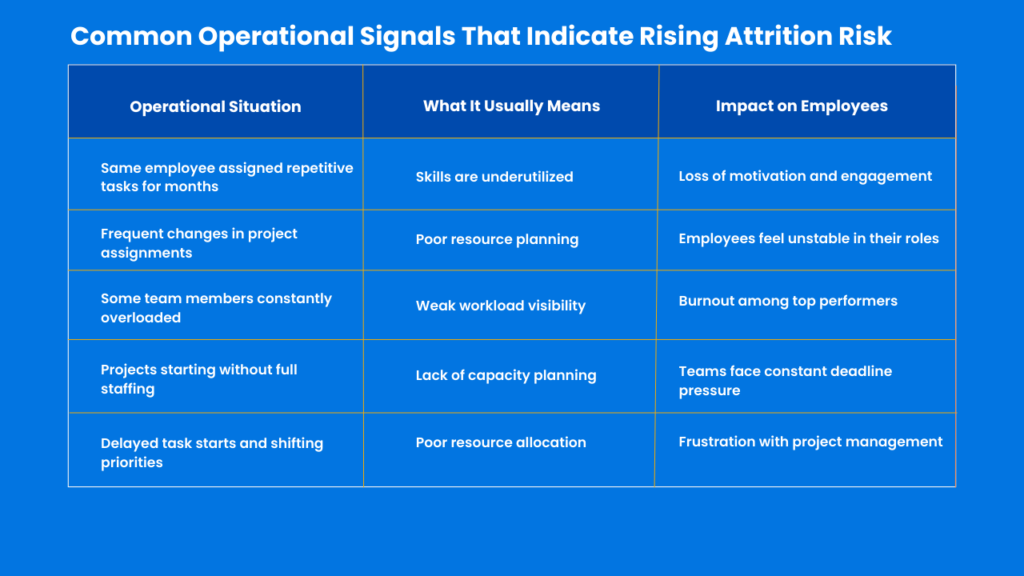
When planning happens through spreadsheets or manual tracking, leaders cannot see the full picture.
This creates common problems:
- Some employees get too much work
- Some employees get work below their skill level
- Teams are moved from project to project frequently
- Important projects start without the right resources
These issues slowly affect motivation.
A good resource management software system brings visibility. Leaders can see team availability, workloads, and project progress in one place.
This clarity helps organizations manage resources effectively.
Using Resource Management Software to Improve Visibility
A modern resources planning software system helps leaders understand how work is distributed.
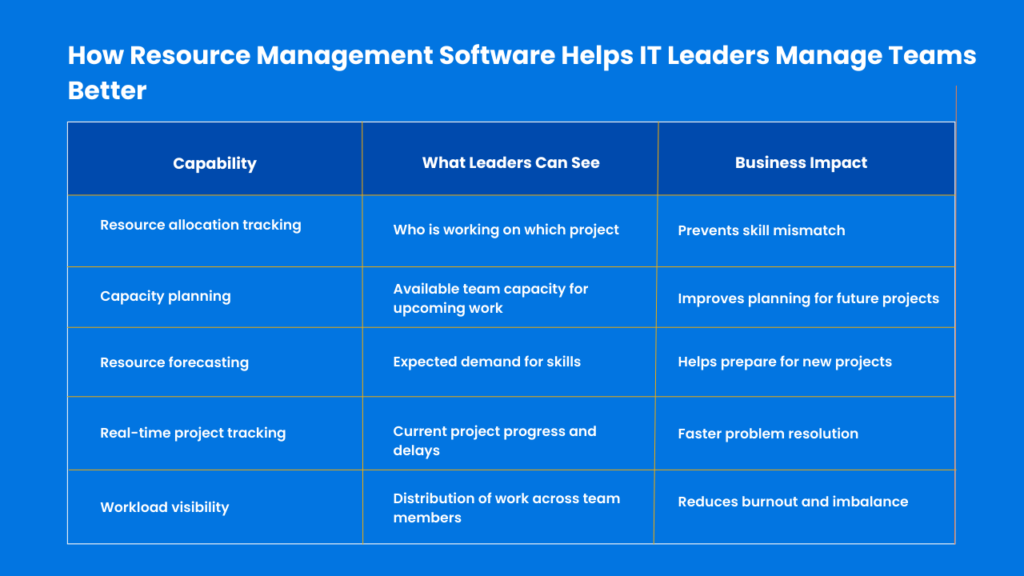
Instead of reacting to problems later, they can plan ahead. With the right resource management tools, organizations can:
- Track team workloads
- Monitor project progress
- Improve capacity planning
- Plan resources for future projects
- Balance resource allocation across teams
Leaders can also quickly identify problems before they grow. For example, they can see if a team member is overloaded. They can see if a project is short on skills. They can also track delays in real time.
Better visibility leads to better decisions.
When Employees Work Below Their Skill Level
One common reason employees leave is simple. They feel their skills are wasted. An experienced developer may spend months doing repetitive support work. A data analyst may work on small tasks when they can handle larger projects.
This often happens when organizations lack strong resource planning. Project managers fill gaps quickly. The goal is to meet delivery commitments. But over time, the same people get stuck in low-value work.
A good resource management software system shows skill levels and past assignments. Leaders can see if someone has been doing the same type of work for too long. With proper resource allocation, tasks can match employee skills better. This improves both productivity and job satisfaction.
Lack of Learning Opportunities
Many professionals leave companies because they stop learning.
Technology changes quickly. Engineers want to work with new tools and systems. They want exposure to new challenges. If employees keep working on similar tasks, they start to feel stuck.
With digital resource management tools, leaders can track project assignments over time. They can see:
- Which employees are repeating the same work
- Who has not worked on new technologies
- Which team members need different project exposure
With this information, leaders can plan better job rotations. They can also assign people to projects that help them grow.
Better capacity planning makes this easier. When future project needs are clear, leaders can prepare teams in advance. This keeps employees engaged.
Lack of Recognition
Recognition matters more than many leaders realize. Talented professionals want their work to be noticed. They want leaders to understand their contribution to project success.
But in busy delivery environments, recognition often gets ignored. Project managers focus on deadlines. Leadership focuses on revenue.
A digital management software system can change this. Leaders can track measurable contributions such as:
- Delivery against project timelines
- Improvements in project efficiency
- Contribution to critical projects
- Support given to other team members
Data makes recognition more objective. When employees know their efforts are visible, motivation improves.
Poor Resource Planning Creates Frustration
Poor planning is another major reason for employee frustration. Projects sometimes begin without clear resource planning. Teams are moved from one project to another. Deadlines change frequently.
This creates stress.
Employees feel they are constantly adjusting to new priorities. With strong resource forecasting, leaders can plan ahead. They can estimate how many people will be needed for future projects.
This allows organizations to prepare early. They can train team members. They can hire new talent. They can adjust project schedules. Better planning creates a stable work environment.
Managing Team Workloads
Workload imbalance can damage even strong teams. In many organizations, a small group of high performers handles the most important work. Over time, these people become overloaded.
Others may remain underutilized.
Without proper resource management tools, this imbalance stays hidden. Digital systems provide real-time visibility into team workloads. Leaders can see how much work each employee is handling. They can rebalance tasks across teams.
Balanced workloads reduce burnout. They also help organizations use their talent more effectively.
Creating a Single View of Operations
Many companies operate with scattered information. Project managers maintain their own spreadsheets. Resource managers track availability separately. Leaders rely on outdated reports.
This leads to confusion.
Modern resources planning software creates a single source of information. Everyone sees the same data about:
- Resource availability
- Project progress
- Skill requirements
- Project timelines
This shared visibility improves coordination. Project managers can plan better. Leaders can make faster decisions. Employees benefit from more stable assignments.
Turning Digital Insights into Leadership Action
Technology alone does not reduce attrition. Leaders must actively use the insights from digital systems to improve decisions.
With resource management software, IT leaders can take practical actions such as:
- Review team workloads regularly to ensure employees are not consistently overloaded. This helps prevent burnout.
- Resource forecasting should be used to prepare for future projects, thus avoiding last-minute pressure in terms of staffing needs.
- Resource allocation patterns should be monitored to ensure that employees are working on projects that suit their skills.
- Real-time tracking of project progress should be used to avoid delays and pressure team members unnecessarily.
- Resource rotations should be planned using project data to ensure that team members get exposure to new technologies and responsibilities.
- Capacity planning should be used to maintain a stable work environment by balancing work needs with team needs.
When leaders consistently use these insights, operations become more predictable. Projects are staffed earlier. Workloads remain balanced. Employees feel their skills are used effectively.
This is where digitalization begins to reduce attrition in a meaningful way.
Conclusion
Attrition in IT companies rarely comes from a single issue. It usually grows from everyday operational problems. Poor resource allocation, uneven workloads, and lack of growth opportunities slowly affect employee motivation.
HR policies alone cannot solve these issues. Leadership teams need better visibility into how projects and people are managed.
This is where digitalization helps.
A powerful resource management software system allows organizations to manage their resources effectively, plan capacity, and track project progress in real time.
When organizations have clear operational insights, they can address issues in real time. The result is better project delivery, stronger teams, and lower attrition.
About Kytes
Kytes provides advanced resource management software designed for project-driven organizations.
The AI- Powered PSA+PPM platform helps companies plan resources, balance team workloads, and improve project success across complex delivery environments.
Using powerful resource forecasting, capacity planning, and real-time project tracking, Kytes allows organizations to manage their resources effectively while preparing for future projects.
For organizations in the IT industry with large teams and multiple projects, Kytes provides the clarity needed to operate smoothly while keeping their talent pool intact.