Blog highlights:
- Why AI for project management is becoming a competitive necessity, not a nice-to-have.
- The 5 capabilities that separate true AI-powered tools from basic automation.
- How leading companies are using AI to predict risks, optimise resources, and protect margins.
- Additional features that give top platforms an edge in speed, accuracy, and global readiness.
Every project holds untapped potential—faster delivery, higher margins, and stronger client relationships. The real differentiator is how quickly these opportunities are identified and acted upon. In this landscape, AI for project management is no longer just a basic requirement—it is a true enabler of project excellence.
Consider this example: A global consulting firm leverages AI for project management to forecast a resource shortage two months in advance, reallocate skilled engineers across geographies, and update client billing automatically. The result—zero missed deadlines, no revenue leakage, and a 20% increase in margins. However, for this to happen, strong and robust systems must be in place to support the technology.
This blog explores the must-have software capabilities that truly make for the best use of AI for project management—empowering leaders to operate with clarity, confidence, and control.
Top 5 AI Capabilities Every Project Management Tool Must Have
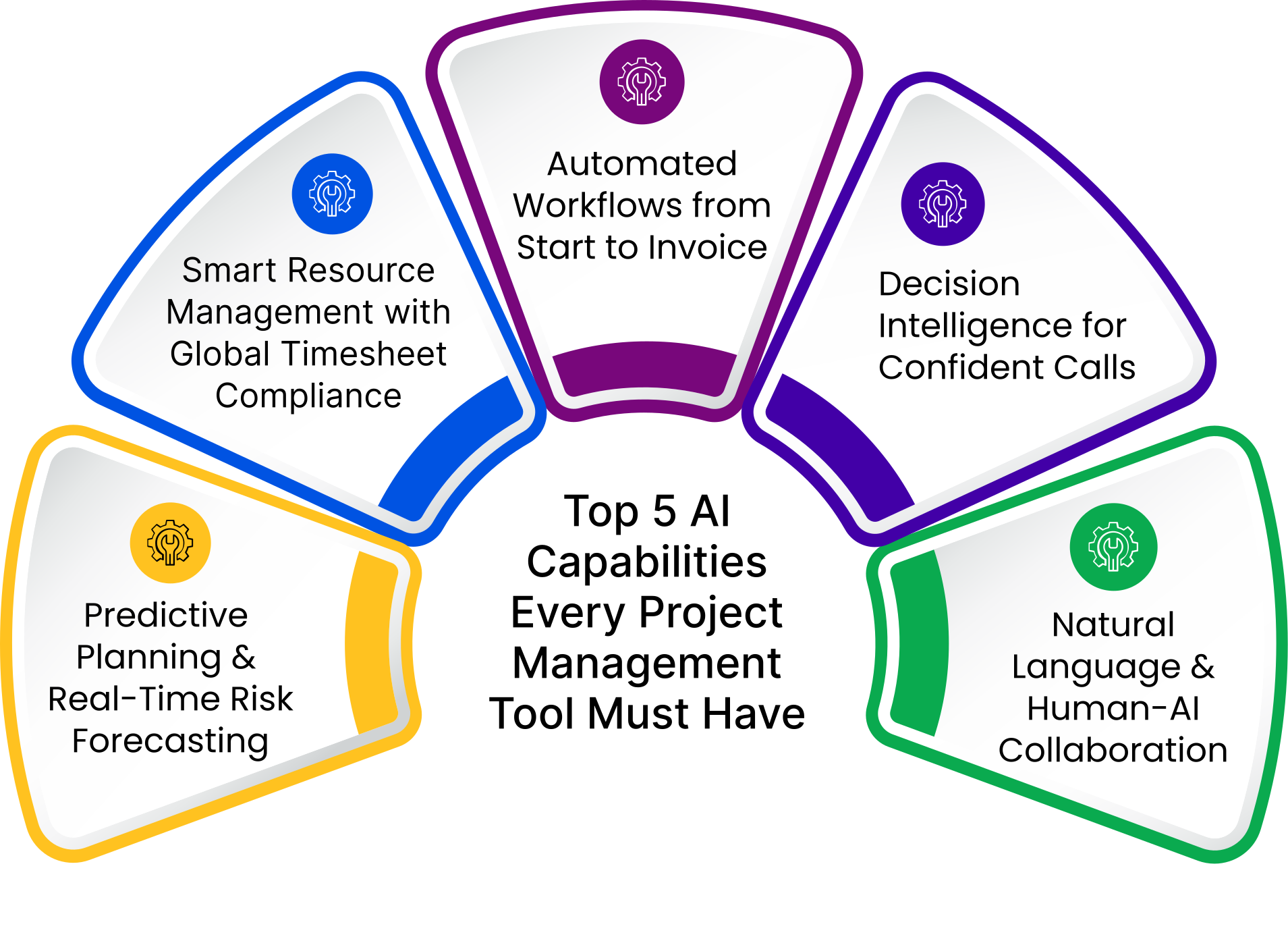
1. Predictive Planning and Real-Time Risk Forecasting
The real strength of AI in project management is foresight. While conventional tools track tasks and timelines, intelligent platforms flag potential setbacks well before they disrupt delivery. Risk signals—drawn from historical data, effort deviations, and scheduling trends—are distilled into context-rich insights with clear recommended actions.
Delivered through intuitive dashboards for real-time updates and visibility, these insights equip leaders to make confident, timely decisions without wading through fragmented reports.
Example 1: An IT services company spots a recurring pattern of delayed approvals that historically causes delivery slippages. Using AI-driven forecasts displayed on real-time dashboards, they revise the approval workflow, recover three weeks in the schedule, and ensure timely revenue recognition.
Example 2: An EPC firm uses predictive analytics to detect a materials supply delay weeks before it becomes critical, enabling them to shift resources, keep the project on track, and maintain projected revenue recognition timelines.
2. Smart Resource Management with Global Timesheet Compliance
Poor resource planning often leads to burnout, underutilisation, and missed billability targets. AI in project management addresses this by matching the right people to the right projects based on skills, certifications, experience, location, and contractual terms. As projects evolve, it suggests reallocations to maintain utilisation and delivery commitments.
Adding to this, if enterprise-grade project systems have AI-enabled resource management, they also ensure global timesheet compliance through a rules-based engine that adapts to country-specific labour laws, client contracts, and approval workflows. Time entries are validated before approval, ensuring accuracy in costing, revenue recognition, and billing.
Case in point: A global staffing company, operating across 12 countries with a workforce of 6,000, faced high bench levels, inconsistent approvals, and compliance risks. By implementing Kytes AI-enabled PSA+PPM, they unified resource planning and timesheet management, enforced rate-card governance, and streamlined approvals. The result?
- 35% improvement in on-time billing.
- 15% bench reduction
- 40% less manual effort in compliance
3. Automated Workflows from Start to Invoice
AI in project delivery goes beyond automated task reminders—it’s about end-to-end orchestration. From SoW approvals to milestone updates, billing triggers, and timesheet nudges, the right system adapts to agile, hybrid, or waterfall models with zero-code workflows and smart alerts, ensuring nothing slips through the cracks.
Customer Case Snapshot
A global organisation operating across offshore and onshore models faced growing compliance demands, fragmented workflows, and revenue leakages caused by delayed submissions.
Key changes implemented with AI project management:
- Streamlined documentation, approvals, and compliance
- Improved coordination of resource, timesheet, and leave workflows
- Established accurate cost accrual and timely revenue recognition
- Integrated seamlessly with existing finance tools
The result was significant gains in efficiency, billing timeliness, and scalability across multiple geographies—all delivered with Kytes AI-enabled PSA+PPM.
4. Decision Intelligence for Confident Calls
Just as end-to-end orchestration streamlines delivery, the next level of efficiency comes from making better decisions, faster. Good project managers don’t just monitor—they decide. And those decisions need to be timely, well-informed, and backed by clear insights.
Beyond simple automation, it’s now the era of Agentic AI—AI that not only analyses but also interprets data, prioritises actions, and provides context-aware recommendations in real time. This enables leaders to act with precision and confidence, even in complex, fast-moving project environments.
It can answer:
- “Which client projects are at risk of margin loss?”
- “Where are we underutilised this quarter?”
- “What’s the effect of hiring two additional engineers?”
With such actionable intelligence, project teams move from reacting to problems to shaping outcomes—laying the foundation for even stronger collaboration between humans and AI in day-to-day delivery.
5. Natural Language and Human-AI Collaboration
Give prompts like “open issues” or “project insights” — or even type, “Show the status of all projects with external vendors in Europe” — and get instant, contextual answers across your projects.
Natural Language Processing (NLP) bridges the gap between human queries and machine insights, enabling teams to interact with their data as naturally as having a conversation. Instead of navigating multiple dashboards or running complex reports, you can simply ask a question and receive a clear, relevant, and actionable response.
From quick project health checks to drafting detailed MoMs from call transcripts, NLP makes data-driven decision-making fast, intuitive, and accessible to everyone — not just tech leads.
Bonus Features That Set the Best Apart
Top-performing tools don’t just tick AI boxes — they evolve with your business needs. Look for capabilities such as:
- Domain expertise of the vendor to guide implementation and provide end-to-end support.
- Initiative-taking Agentic AI that acts, not just recommends.
- End-to-end visibility spanning the entire lifecycle — from opportunity to invoicing.
- Role-tailored dashboards for every function, from delivery to finance.
- Compliance-ready governance that meets DCAA, labour law, and audit trail requirements.
- Multi-currency, multi-entity readiness to support global operations.
- Plug-and-play industry setup for sectors like pharma, IT, and consulting.
- Inbuilt timesheet intelligence, forecasting, and billing accuracy to improve financial outcomes.
FAQs
1. How to choose the best AI for project management software?
Assess scalability, industry fit, integration capabilities, and vendor expertise before making a decision.
2. Can AI for project management support agile and hybrid workflows?
Yes. Advanced platforms adapt to agile, waterfall, and hybrid models through configurable, no-code workflows.
3. Is AI for project management suitable for small and medium businesses?
Yes. Modular AI features allow smaller organisations to start with core functions and scale as needed.
4. How does AI for project management improve collaboration in remote teams?
It centralises data, automates updates, and delivers real-time insights to keep distributed teams aligned.
5. What is the biggest challenge in implementing AI for project management?
Maintaining clean, structured data is essential, as AI accuracy relies on high-quality inputs.
6. Can AI for project management integrate with ERP or CRM systems?
Yes. Many solutions offer pre-built integrations to unify workflows and eliminate data silos.
7. How soon can results be seen from AI for project management?
Organisations often experience efficiency gains, faster delivery, and cost savings within 3–6 months.
Final Thoughts
AI for Project Management isn’t about replacing managers—it’s about giving them superhuman foresight and precision.
From predicting risks months ahead to automating compliance across continents, AI transforms project delivery from reactive firefighting to proactive value creation. And as industry competition intensifies, the gap between AI-enabled teams and traditional ones will only grow wider.
Teams that harness AI today won’t just meet deadlines—they’ll set new performance benchmarks. Book a demo to see how Kytes AI-enabled PSA+PPM can help your enterprise build a culture of efficiency, productivity, and margin.