Blog Highlights
- Project management goals act as the compass for successful execution.
- A 9-step playbook helps set clear, measurable, and actionable goals.
- Strong goals combine leading (predictive) and lagging (outcome) metrics.
- New goals in 2025 focus on AI, ESG, agility, and customer-first outcomes.
- Integrated systems align delivery, resources, and financials seamlessly.
- Kytes AI-enabled PSA + PPM turns project goals into business growth.
Every project begins with an ambition—to deliver something valuable on time, on budget, and in line with expectations. Yet, despite careful planning, a staggering number of projects fall short. Research shows that projects often fail not because teams aren’t working hard, but because the goals are unclear, vague, or poorly aligned with business priorities.
Project management goals are the compass of execution. They define what success looks like and create a roadmap to get there. Without them, delivery teams chase shifting priorities, resources are misallocated, and financials spiral out of control.
But here’s the catch: writing goals like “deliver faster” or “improve margins” isn’t enough. To succeed, organizations must set goals that are tied directly to business outcomes and supported by the right systems—across delivery, resources, and financials.
Instead of asking “what is the goal of project management?”, leaders today should ask: “how do we set goals that are actionable, measurable, and achievable—while ensuring the systems behind them keep everything on track?”
This article breaks down a practical playbook for setting strong project management goals, explores the new project management goals shaping modern enterprises, and highlights why integrated systems are critical to making them stick.
How to Set Project Management Goals: A 9-Step Playbook
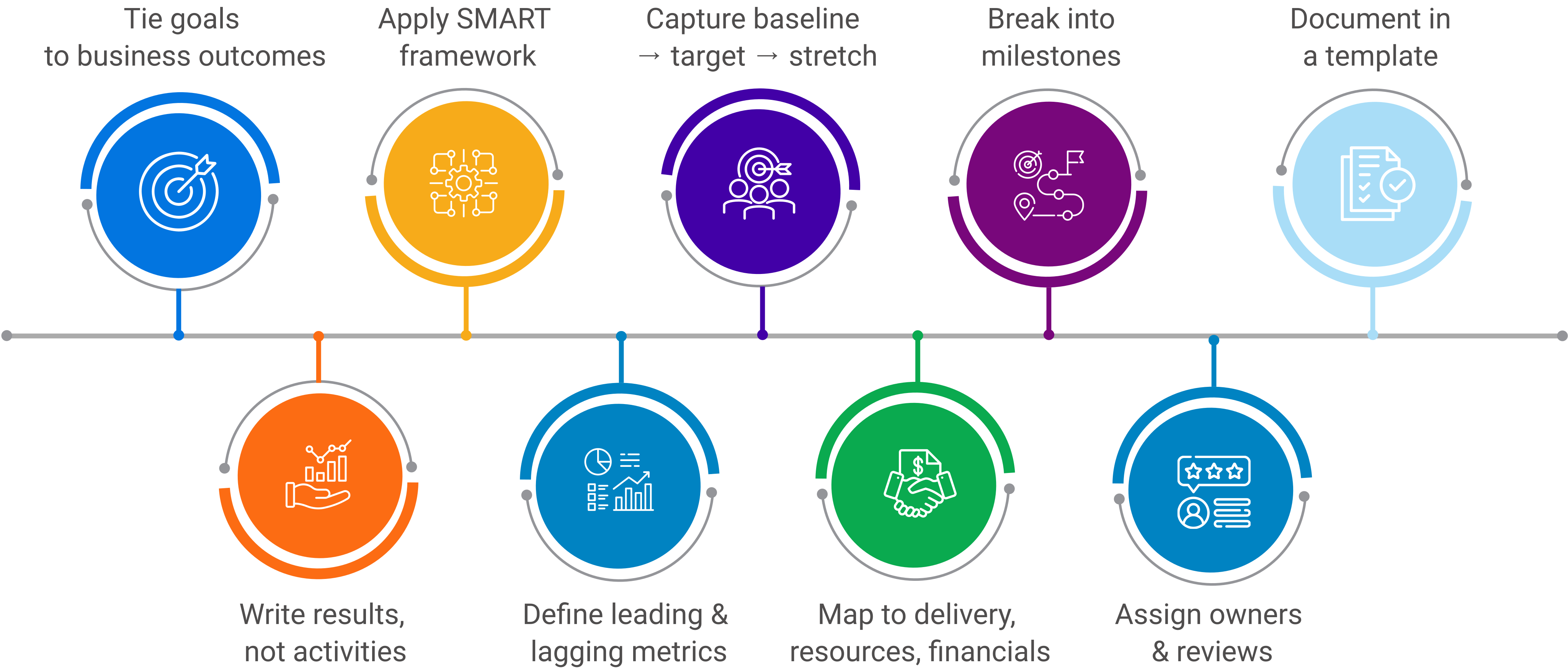
9 Step Framework to Set Project Management Goals
When it comes to project management, clarity beats ambition. Teams often set out with lofty aspirations—“deliver faster,” “improve collaboration,” “increase revenue”—but without structure, these remain wish lists, not actionable goals. The difference between projects that succeed and those that stall is often in how goals are set and aligned.
Here’s a detailed nine-step playbook that helps project leaders set project management goals that actually drive outcomes.
1. Tie goals to business outcomes
Every project should contribute to a larger organizational objective. Whether it’s improving margins, enhancing customer satisfaction, or speeding up product launches, project goals must ladder up to company strategy.
For example, if your organization has a goal to increase annual revenue by 10%, a project goal could be:
“Accelerate time-to-market by 20% for new product launches this fiscal year.”
This ensures projects don’t operate in isolation—they directly serve the business agenda.
2. Write results, not tasks
Too often, goals describe activities instead of outcomes. Activities keep people busy, but results show impact.
❌ Weak goal: “Implement a new CRM system.”
✅ Strong goal: “Increase sales pipeline visibility by ensuring 95% of opportunities are logged and tracked within the new CRM by Q3.”
By framing goals around results, teams know why they’re doing something and what success looks like, not just what they need to do.
3. Apply the SMART framework
SMART goals—Specific, Measurable, Achievable, Relevant, and Time-bound—remain the gold standard. They eliminate ambiguity and set clear guardrails.
Example: Instead of “Improve customer satisfaction,” set:
“Achieve a Net Promoter Score (NPS) of 60+ within six months of product rollout.”
SMART goals also allow for accountability. They give managers a way to measure progress objectively rather than relying on subjective opinions.
4. Define leading & lagging metrics
Metrics make goals real. But not all metrics are equal—strong goals combine lagging (outcomes) and leading (drivers) indicators.
- Lagging metrics: Show results after the fact—profitability, customer satisfaction, revenue.
- Leading metrics: Predict outcomes—on-time milestone completion, utilization rates, defect detection rate.
For example, a lagging metric could be “Project margin ≥ 25%.” The leading indicators supporting it might include “Resource utilization ≥ 80%” and “Scope changes ≤ 10%.” Together, they give a holistic view.
5. Capture baselines and set targets
A target without a baseline is just a guess. Start by recording where you stand today.
If average resource utilization is 70%, set a realistic target like:
“Increase average utilization from 70% to 77% in the next two quarters.”
This makes progress measurable and prevents goals from being vague aspirations.
6. Map across delivery, resources, and financials
Every project management goal needs support from three core systems:
- Delivery: Milestones, dependencies, and quality standards. Example: ensuring 95% of milestones are delivered on time.
- Resources: Availability, skills, and allocation. Example: matching project demand with in-house skills before hiring.
- Financials: Budgets, margins, and revenue recognition. Example: ensuring actual costs don’t exceed 95% of planned costs.
If these three aren’t aligned, even the best goals fall apart. For instance, aiming for on-time delivery without enough resources is setting yourself up for failure.
7. Break into milestones and key results
Large goals are intimidating and difficult to measure mid-way. Splitting them into Key Results (KRs) provides checkpoints.
Example: If the goal is to “Reduce project cycle time by 20%,” key results might include:
- Complete design phase in 30 days (vs 45 today).
- Reduce approval cycles from 3 weeks to 1 week.
- Automate 80% of recurring tasks.
Breaking it down makes progress visible and motivates teams with incremental wins.
8. Assign ownership and cadence
Goals without owners become no one’s responsibility. Every project management goal must have a named accountable person and a cadence for review.
- Ownership: Assign one accountable lead (not multiple owners).
- Cadence: Weekly reviews for short-term KRs, monthly steering committee for strategic goals.
This ensures accountability and timely corrections before problems spiral out of control.
9. Document in a template
Verbal goals get forgotten. Written goals drive accountability. Use a standard template or worksheet to ensure consistency across projects.
A good template captures:
- Goal statement
- KPIs (leading & lagging)
- Baseline vs target
- Key results/milestones
- Owner(s)
- Risks & assumptions
- Review cadence
When every goal is documented in the same format, it’s easier for leadership to review and compare across projects.
Aligning Goals With Delivery, Resources, and Financials
Setting goals is only half the battle. Achieving them requires the right systems to connect the dots between strategy and execution.
Project Delivery
Without structured delivery management, goals risk slipping through missed milestones, overlooked dependencies, or quality issues. Systems must track progress in real time, flag risks, and provide visibility into the critical path.
Project Resources
People make projects happen—but only if their skills and availability are matched properly. Resource management systems should forecast demand, optimize utilization, and reduce bench losses. This ensures staffing aligns with project goals instead of working against them.
Project Financials
Budgets, revenue, and margins can’t be an afterthought. A project might meet timelines yet destroy profitability. Financial systems must track budgets, cost variances, and revenue recognition continuously.
The Problem: Many organizations rely on siloed tools—spreadsheets for planning, a separate HR tool for resourcing, and standalone financial systems. This creates multiple versions of truth.
The Solution: Integrated project management software aligns delivery, resources, and financials into a single system, ensuring project management goals remain achievable.
Want to see how your project goals can align seamlessly with delivery, resources, and financials? Book a demo and explore how Kytes makes project management intelligently simple.
Core Project Management Goals Every Business Should Prioritize
While specific goals vary, some universal project management goals apply across industries:
- Timely Delivery – Staying on schedule protects trust and competitiveness.
- Optimized Resource Utilization – Avoids costly underuse or burnout while maximizing billability.
- Financial Control – Keeps projects profitable and aligned with budgets.
- Customer Satisfaction – Ensures projects deliver the promised value.
- End-to-End Visibility – One version of truth drives better decisions.
Goals vs Why They Matter vs Risk Without Them
| Goal | Why It Matters | Risk Without It |
|---|---|---|
| Timely Delivery | Builds trust & reputation | Missed deadlines, lost business |
| Resource Utilization | Improves margins, reduces bench | High costs, employee burnout |
| Financial Control | Protects revenue & ROI | Margin leakage, budget overruns |
| Customer Satisfaction | Repeat business & referrals | Dissatisfied clients, churn |
| End-to-End Visibility | Enables proactive decisions | Reactive, siloed management |
New Project Management Goals in 2025 and Beyond
The way organizations define project success is evolving rapidly. Traditional goals—delivering on time, within scope, and on budget—are still essential, but they no longer paint the full picture. In 2025 and beyond, enterprises are focusing on new project management goals that reflect the realities of digital transformation, global workforces, and heightened customer expectations.
1. Data-Driven Decision Making
Dashboards today can’t just be retrospective reports; they must power real-time, actionable insights. Leaders need instant visibility into delivery progress, resource utilization, and financial performance to make quick, informed choices. A data-driven approach shifts projects from being reactive to proactive.
2. AI-Powered Forecasting
Predictive analytics and AI models are transforming how goals are monitored and achieved. From identifying upcoming risks to forecasting revenue leakage or predicting resource bottlenecks, AI allows project managers to act before problems escalate. These insights help organizations stay ahead of delays, budget overruns, and compliance failures.
3. Sustainability & Compliance
ESG goals, regulatory compliance, and ethical standards are no longer optional—they are business-critical. Modern projects must track their environmental footprint, ensure labor law compliance, and maintain audit-ready documentation. Goals now expand to include sustainability targets alongside traditional KPIs.
4. Agility for Hybrid Teams
Distributed workforces are the norm. Project managers must create goals that accommodate employees across multiple time zones, contract workers, and hybrid setups. Agility isn’t just about methodology—it’s about building flexible systems that keep collaboration smooth and accountability clear, regardless of location.
5. Customer-First Outcomes
Customer expectations define success. Goals now focus on adoption rates, CSAT scores, and overall value delivered—not just deliverables. Measuring impact through the customer’s lens ensures projects are tied to long-term business growth.
Together, these new project management goals expand beyond the traditional “iron triangle” and reflect the complex, interconnected business environment of 2025.
Turning Goals Into a Measurable Plan
Once goals are set, they need to be translated into actionable plans. A simple worksheet helps make goals measurable and trackable.
Goal-to-Execution Worksheet Elements:
- SMART Goal Statement – Clear, measurable objective.
- KPIs & Thresholds – Define baseline → target → stretch.
- Delivery Milestones – Map checkpoints tied to outcomes.
- Resource Plan – Capacity, skills, and utilization targets.
- Financial Plan – Budgets, margins, risks.
- Governance Cadence – Review frequency, dashboards, accountability.
Ready to turn project management goals into measurable outcomes? Book a demo and see how Kytes ensures one version of truth across projects, people, and profits.
Challenges When Goals Aren’t Backed by Systems
Even the best goals fall apart without the right systems. Common pitfalls include:
- Fragmented tools – Teams work on conflicting data.
- Resource bottlenecks – Overbooked staff or idle bench time.
- Scope creep – No guardrails against shifting requirements.
- Margin erosion – Budgets tracked too late to prevent leakage.
- Customer dissatisfaction – Promises don’t match outcomes.
The lesson: setting goals is easy. Achieving them requires integrated systems that connect strategy with execution.
How Kytes AI-Enabled PSA + PPM Software Aligns Goals with Execution
Setting strong project management goals is only half the journey. The real challenge lies in execution—ensuring that delivery schedules, resource capacity, and financial outcomes all move in sync with those goals. That’s where Kytes AI-enabled PSA + PPM software comes in.
Kytes is designed to eliminate silos and provide a single version of truth across projects, people, and profits. Instead of juggling separate tools for task management, resource allocation, and financial tracking, Kytes unifies them into one integrated platform. This ensures that when a goal is set—whether it’s reducing cycle time, improving utilization, or protecting margins—the supporting systems are already in place to measure and achieve it.
How Kytes makes a difference:
- Project Delivery: Track milestones, dependencies, and risks with real-time dashboards. AI predicts slippages before they derail goals.
- Resource Management: Match skills to demand, reduce bench time, and forecast hiring needs with precision. Agentic AI optimizes utilization across contracts and geographies.
- Financial Management: Monitor budgets, revenue recognition, and profitability live, not after the fact—protecting margins proactively.
- Visibility & Governance: CXOs and PMOs get end-to-end visibility, ensuring decisions are based on accurate, unified data.
Kytes empowers enterprises to move from setting goals to consistently achieving them with measurable outcomes.
For organizations seeking to turn project management goals into tangible business results, Kytes offers not just software—but a growth engine.
Conclusion – Goals as the Growth Engine
Project management goals are more than checkboxes—they are the growth engine of modern enterprises. When tied to business outcomes and supported by delivery, resources, and financial systems, they drive not just project completion but also profitability and customer satisfaction.
The shift toward new project management goals—data-driven insights, AI forecasting, sustainability, and customer-centricity—shows that success today requires more than deadlines. It requires alignment.
Goals set the direction. Systems ensure you get there. Together, they deliver projects that fuel business growth and customer delight.