
Blog Highlights
- Automotive projects fail due to small visibility gaps, not lack of effort. Structured oversight prevents silent delays and cost overruns.
- Automotive Project Management Software centralizes planning, compliance, budgeting, and execution within one integrated management system.
- Real time dashboards, time tracking, and resource management improve resource allocation and reduce bottlenecks across teams.
- Portfolio level visibility helps manage multiple automotive projects while aligning strategy, cost control, and timelines.
- Integrated enterprise application capabilities ensure compliance with APQP, strengthen reporting accuracy, and protect program margins.
A production head once said this during a review meeting. The design was ready. The supplier was confirmed. The tooling vendor had started work. Yet nobody could clearly answer one question. Are we still on schedule?
The issue was not effort. It was visibility. Different teams tracked progress in different files. Finance had one version of cost data. Engineering had another. Procurement worked from emails. The project looked fine on paper. In reality, small delays were already compounding.
This is the daily pressure behind automotive projects. They run across multiple plants, suppliers, and compliance checkpoints. A missed milestone is rarely dramatic. It is often silent and gradual.
This is where Automotive Project Management Software becomes critical. It creates structure, clarity, and control. It connects people, data, and decisions in real time. It replaces fragmented management tools with one integrated management system designed for automotive complexity.
Why Automotive Projects Need Structured Oversight
Automotive programs are multi layered. A single vehicle platform may involve:
- Design validation and engineering releases
- Supplier onboarding and tooling readiness
- Pilot production and quality checks
- Compliance documentation under APQP
Each stage depends on strict sequencing. A delay in tooling impacts pilot builds. A supplier quality issue affects launch readiness.
Project management software for the automotive industry standardizes these workflows. It ensures:
- Defined stage gates
- Assigned task ownership
- Document traceability
- Clear approval cycles
Instead of relying on disconnected spreadsheets, teams work inside one enterprise application. Everyone sees the same data. Everyone understands the same timeline.
Structured Planning Without Guesswork
Planning in automotive development must balance cost, time, and risk. Poor planning leads to late design changes and cost escalations.
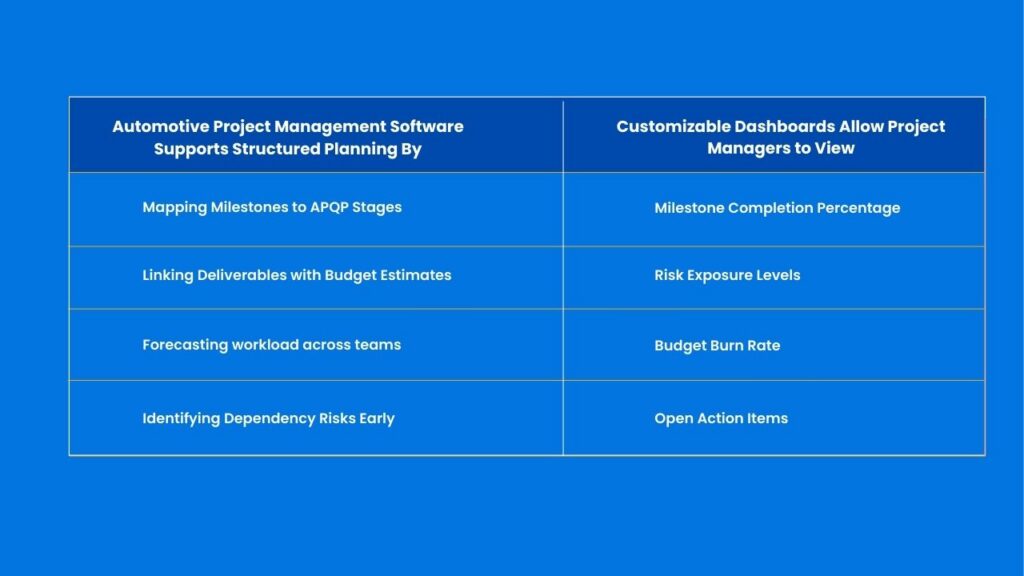
These dashboards provide clarity in real time. Leaders do not wait for manual reports. They see progress instantly and act quickly.
Budget Management with Real Time Visibility
Cost control determines profitability in automotive programs. Tooling, testing, engineering changes, and supplier negotiations all affect margins.
Automotive Project Management Software strengthens financial discipline through:
- Real time tracking of committed and actual costs
- Budget versus forecast comparisons
- Automated cost variance alerts
- Integrated reporting with ERP systems
This visibility prevents financial surprises. Managers detect overruns early. They adjust scope or negotiate changes before damage spreads.
When financial tracking is built into the management tools, decision making becomes sharper. Finance and operations work with aligned data.
Smarter Resource Allocation and Resource Management
Resource allocation often determines whether a project meets its timeline. Engineers may be assigned to multiple programs. Testing labs have limited capacity. Supplier constraints add uncertainty.
Without structured resource management, teams overcommit and underdeliver.
Automotive Project Management Software supports:
- Capacity planning across departments
- Machine hour tracking
- Time tracking for individual contributors
- Visibility into cross project workloads
Time tracking is particularly valuable. It reveals actual effort against planned estimates. Over time, this improves forecasting accuracy.
Real time resource management enables managers to:
- Shift workloads before bottlenecks occur
- Reassign tasks when priorities change
- Optimize workforce utilization
Multi Program Oversight for Complex Portfolios
Most automotive firms run several programs at once. New product development overlaps with lifecycle updates and cost reduction initiatives. Without coordinated oversight, priorities clash.
Automotive Project Management Software provides portfolio level visibility. It displays all active and upcoming programs in one environment. Managers track dependencies across projects.
This prevents duplication of effort. It reduces competition for shared resources. It highlights risk clusters that could impact overall delivery.
Customizable dashboards help leaders compare performance across programs. They identify high risk initiatives early. They allocate executive attention where it matters most.
Real Time Collaboration Across Functions
Automotive development depends on coordinated communication. Engineering, quality, procurement, and suppliers must stay aligned.
Project management software for the automotive industry centralizes collaboration by offering:
- Shared task boards
- Document version control
- Comment threads linked to milestones
- Controlled supplier access
When updates happen in real time, misunderstandings reduce. Teams avoid duplicate work. Changes are documented clearly.
Reporting That Drives Action
Leaders need accurate insights to guide decisions. Manual reporting delays action.
Automotive Project Management Software automates reporting through:
- Real time milestone tracking
- Cost variance summaries
- Risk heat maps
- Productivity insights from time tracking data
These insights support faster decisions. Managers act before issues escalate.
Compliance Built Into the Workflow
Compliance is central to automotive operations. APQP requires defined deliverables at each stage.
Automotive Project Management Software embeds compliance checkpoints directly into workflows. It ensures:
- Mandatory document uploads
- Structured stage gate approvals
- Audit trail generation
- Traceability of engineering changes
This reduces manual effort. It also strengthens readiness for audits and customer reviews.
Integration with the Broader Enterprise
Automotive firms operate within complex digital ecosystems. ERP, PLM, and CRM systems generate critical data daily.
A strong enterprise application must integrate seamlessly. Automotive Project Management Software should connect with:
- ERP systems for financial synchronization
- PLM platforms for engineering data
- Production systems for operational feedback
Integration ensures consistent information flow. It eliminates duplicate entries. It supports faster reporting cycles.
As automotive companies invest in digital transformation and software development initiatives, the management system must adapt. It should manage both physical production programs and digital projects within one unified framework.
Conclusion
Automotive projects are demanding by nature. They require precision, coordination, and financial control. Small visibility gaps can lead to large operational consequences.
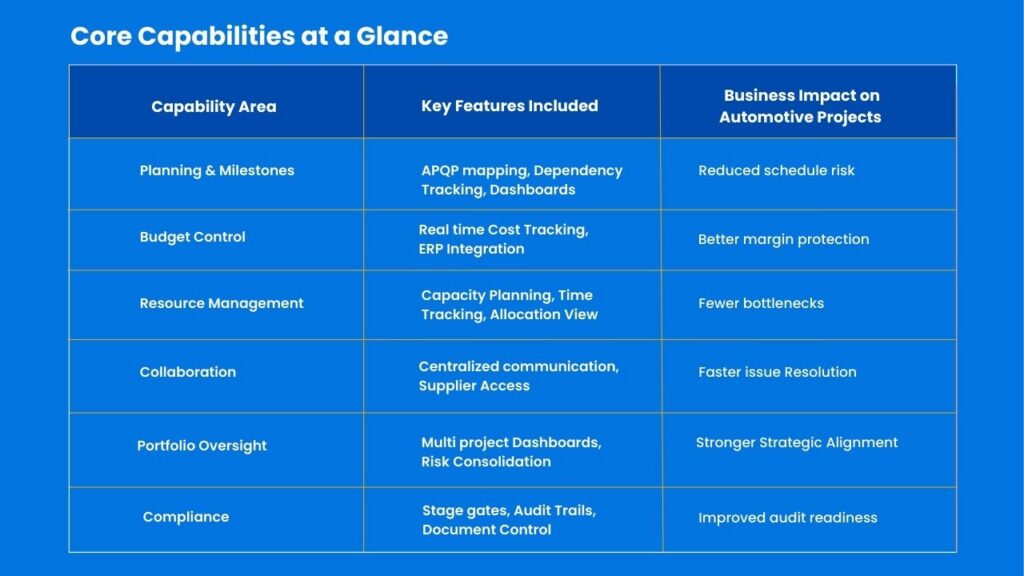
Automotive Project Management Software addresses these challenges directly. It connects planning, resource allocation, time tracking, compliance, and reporting within one integrated management system.
With customizable dashboards and real time data access, leaders gain clarity. Teams gain accountability. Organizations gain control over complex automotive projects.
About Kytes
Kytes [PSA + PPM] is built specifically for the automotive domain. It supports APQP driven workflows, financial discipline, and structured collaboration inside a powerful enterprise application.
For organizations seeking reliable management tools designed for real world automotive execution, Kytes PSA® delivers clarity, control, and measurable performance improvement.