
Blog Highlights
- Fragmented data, not lack of effort, causes most automotive delays.
- Structured stage-gate planning links timelines with budget control.
- Real time resource allocation improves forecasting across multiple projects.
- Embedded collaboration and document control strengthen compliance.
- Cloud based project management ensures enterprise-wide visibility and predictable execution.
During a program review, a plant head once asked a simple question. Are we still on schedule?
The tooling was underway. Suppliers were aligned. Engineering had closed major releases. Yet the room went silent. Each team had its own data. Finance tracked costs in one file. Engineering used another tool. Procurement relied on emails and spreadsheets. No one had a single version of truth.
This is how delays begin. Not with crisis. With scattered information.
Automotive programs run across plants, suppliers, and strict compliance gates. Leaders must manage projects effectively under tight timelines and cost pressure. Small visibility gaps can create expensive surprises. A late supplier approval can impact pilot builds. A delayed engineering change can push production targets.
Automotive Project Management Software brings structure to this complexity. It connects planning, execution, cost, and compliance within one integrated system. It gives leaders clarity before problems grow.
Why Automotive Projects Demand Discipline
A vehicle program moves through defined phases. Design validation, supplier onboarding, tooling readiness, pilot production, and APQP compliance all follow strict sequencing.
Each phase depends on timely approvals and complete project documents. A missed document upload can delay a stage gate. An overlooked risk can escalate cost.
Traditional project management tools struggle in this environment. Automotive programs require deeper control. Teams often handle multiple projects at once. Engineers split time across platforms. Procurement supports several suppliers. Without structured resource management features, overload becomes common.
Automotive Project Management Software addresses this reality. It standardizes workflows. It assigns task management responsibilities clearly. It records decisions and approvals in real time.
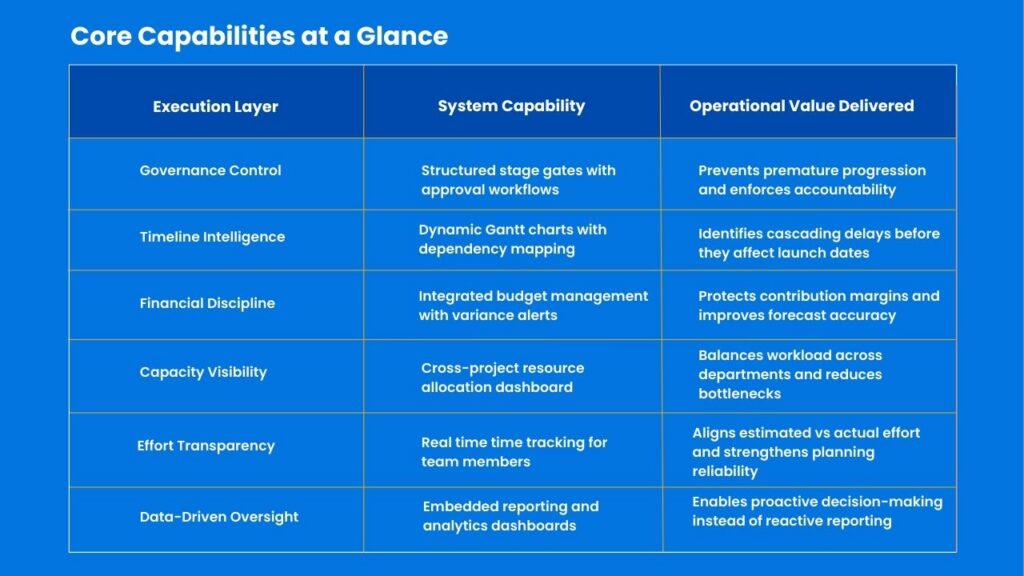
Core Capabilities That Drive Control
Automotive programs do not fail because teams lack skill. They struggle when visibility is fragmented across planning, cost, compliance, and resource coordination.
Automotive Project Management Software must therefore do more than organize tasks. It must create operational discipline across the full lifecycle of a vehicle program.
At a strategic level, modern platforms are expected to deliver four integrated outcomes:
1. Predictable Program Flow
Stage-gate driven project planning ensures that engineering releases, tooling milestones, and supplier approvals move in sequence. Gantt charts support dependency control, but governance structure ensures accountability. Together, they reduce last-minute escalations.
2. Financial Control Embedded in Execution
Budget management cannot sit outside delivery teams. Cost tracking must operate in real time, aligned with schedule changes and scope updates. When cost visibility updates alongside progress tracking, leaders protect margins early rather than explaining overruns later.
3. Intelligent Resource Allocation Across Multiple Projects
Automotive firms rarely run one program at a time. Resource allocation must span departments and plants. Time tracking enables leaders to compare estimated effort with actual consumption. This strengthens forecasting and improves future bid accuracy.
4. Coordinated Collaboration with Compliance Integrity
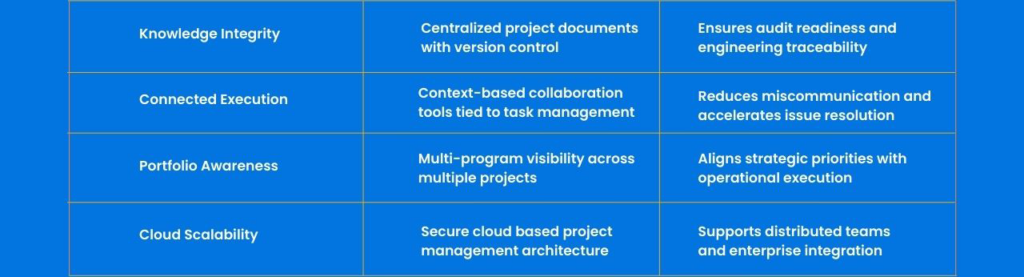
Collaboration tools should not be chat layers. They must be tied directly to task management, approvals, and centralized project documents. Every engineering change, supplier upload, and milestone decision must remain traceable. Reporting and analytics then convert this structured data into actionable insight.
When these capabilities operate inside a cloud based project management environment, data silos disappear. Teams manage projects effectively because everyone works from the same operational framework.
Project Planning with Clarity and Structure
Project planning in automotive is not theoretical. It ties directly to tooling schedules, supplier readiness, and production targets.
- Automotive Project Management Software provides structured planning templates aligned with APQP. Managers can define milestones, dependencies, and approvals in advance. Gantt charts present timelines clearly. Leaders see critical paths without waiting for manual reports.
- Task management becomes consistent across departments. Each activity has an owner. Each milestone has defined criteria. This removes ambiguity.
- Real time updates ensure progress is visible across the organization. When a task slips, impact analysis happens quickly. Teams adjust early instead of reacting late.
- Cloud based project management further improves accessibility. Stakeholders from different plants or regions work inside the same environment. No version conflicts. No parallel spreadsheets.
Budget Management That Protects Margins
Margins in automotive programs are thin. Tooling, validation testing, supplier changes, and engineering revisions all influence cost.
- Automotive Project Management Software strengthens budget management through real time cost tracking. Managers compare committed costs against forecasts. Variance alerts highlight early deviations. Financial dashboards link operational progress with cost performance.
- When finance and operations share the same data, discussions become precise. Leaders understand how schedule delays affect revenue and margin. They make informed trade off decisions.
- Budget management integrated into project management tools prevents late financial shocks. It supports stronger negotiations with suppliers. It ensures disciplined change control.
Resource Allocation Across Multiple Projects
Resource allocation often defines success or failure. Skilled engineers may be assigned to several vehicle platforms. Testing facilities operate at full capacity. Suppliers face production constraints.
Without structured resource management features, overload remains hidden. Teams appear busy, yet timelines slip.
Automotive Project Management Software provides visibility into cross project workloads. Managers view capacity across departments. They track machine hours and specialist availability. Time tracking data reveals actual effort against planned estimates.
This data improves forecasting. Over time, estimation accuracy increases. Leaders distribute work based on facts, not assumptions. They resources manage based on measurable capacity.
When managing multiple projects, portfolio visibility becomes critical. Executives see risk clusters across programs. They reallocate resources before bottlenecks escalate.
Collaboration Tools That Connect Teams
Automotive development requires strong coordination. Engineering, quality, procurement, and suppliers must work as one system.
Collaboration tools inside Automotive Project Management Software centralize communication. Shared dashboards show milestone status. Document version control protects engineering releases. Comment threads remain linked to specific tasks.
Controlled access allows suppliers to upload required documents. Approval cycles remain traceable. This reduces email dependency and manual follow ups.
Clear collaboration improves accountability. Team members understand their role within the broader timeline. Miscommunication reduces. Decisions become documented.
Reporting and Analytics for Confident Decisions
Leaders cannot depend on delayed reports. They require reporting and analytics that reflect real time performance.
Automotive Project Management Software automates milestone tracking and cost variance summaries. Risk heat maps highlight vulnerable areas. Time tracking insights show productivity trends.
Dashboards present portfolio level performance. Executives compare programs side by side. High risk initiatives receive attention early.
Real time reporting improves governance. Instead of reacting to issues during quarterly reviews, managers respond during execution. This strengthens program predictability.
Compliance and Document Control Built In
Compliance in automotive is non negotiable. APQP demands structured deliverables at each stage.
- Automotive Project Management Software embeds compliance into workflows. Mandatory document uploads prevent incomplete submissions. Stage gate approvals require defined evidence. Audit trails generate automatically.
- Centralized project documents improve traceability. Engineering changes link directly to approval records. During audits, teams retrieve information instantly.
This reduces administrative burden. It also increases confidence during customer reviews.
Cloud Based Project Management and Enterprise Integration
Automotive organizations operate complex digital ecosystems. ERP manages finance. PLM manages engineering data. Production systems track operations.
Cloud based project management ensures seamless integration with these platforms. Financial data synchronizes automatically. Engineering updates flow into planning dashboards. Production feedback informs risk assessments.
AI based project management software architecture supports scalability. New programs can be configured quickly. Global teams access the system securely.
Cloud based project management also supports digital transformation initiatives. Automotive firms increasingly manage software development alongside physical production. A unified platform ensures both domains follow consistent governance.
Managing Growth with Structure
As product portfolios expand, complexity increases. Organizations must manage projects effectively while protecting margins.
Automotive Project Management Software provides that discipline. It aligns project planning, budget management, resource allocation, and compliance within one structured framework. It allows leaders to oversee multiple projects without losing detail.
Structured visibility builds confidence. Teams operate with shared data. Executives make decisions based on real time facts.
Conclusion
Automotive programs demand precision. They require tight coordination, financial discipline, and transparent reporting. Small visibility gaps can create large consequences.
Automotive Project Management Software eliminates fragmentation. It centralizes collaboration tools, reporting and analytics, time tracking, and resource management features. It strengthens budget management and compliance.
When supported by cloud based project management architecture, organizations gain flexibility and control. They resources manage intelligently across portfolios. They protect margins. They deliver programs predictably.
About Kytes
Kytes [PSA + PPM] is designed specifically for automotive complexity. It supports APQP aligned workflows, structured project planning, and disciplined budget management.
Kytes integrates real time dashboards, resource allocation tools, collaboration tools, and reporting and analytics inside one enterprise grade platform. It enables organizations to manage projects effectively across multiple projects and global teams.
For automotive firms seeking clarity, control, and measurable performance improvement, Kytes delivers structured execution with confidence.