Blog Highlights
- Siloed tools create misalignment across enterprise functions — leading to delayed starts, reactive decisions, and margin erosion before execution even begins.
- Project planning is the strategic core of enterprise delivery, linking business intent with capacity, cost, and customer commitments.
- Fragmented systems fail because they isolate people, projects, and financials, preventing organizations from achieving true operational foresight.
- Modern project planning software transforms static plans into intelligent frameworks, using real-time data, automation, and predictive analytics for accuracy and agility.
- Enterprise project planning tools must unify WBS, resourcing, financials, and risk management within a single integrated ecosystem.
- The shift toward predictive and autonomous planning enables enterprises to adapt dynamically, turning data-driven foresight into sustainable profitability and delivery excellence.
In most enterprise environments, project success is rarely a result of how well teams execute—it’s a reflection of how well they plan. Yet, even today, many IT and ITES organizations rely on a patchwork of siloed tools—one for project tracking, another for financials, another for resources, and several more for communication. Each works perfectly within its own boundary, but together they form a disjointed system that fails to deliver alignment.
This fragmentation becomes most visible during the project planning process, where strategy should meet execution. Sales commitments, delivery timelines, resource capacity, and financial forecasts often operate on separate platforms with no single version of truth. The result? Delayed starts, inaccurate estimates, missed margins, and reactive decision-making.
Modern enterprises can no longer afford to treat project planning as a standalone function or a one-time activity. It is the connective tissue that links opportunity to delivery—defining scope, effort, cost, and accountability across every stakeholder. As digital projects grow in complexity, the need for project planning software that unifies people, projects, and performance becomes non-negotiable.
The shift toward new project planning isn’t just about better scheduling; it’s about creating an ecosystem where every decision—strategic or operational—is informed by data, guided by intelligence, and aligned with business outcomes.
The Role of Project Planning in Enterprise Delivery
In enterprise project management, project planning is more than setting milestones and assigning tasks—it’s the strategic process that translates business intent into executable outcomes. For IT and ITES organizations managing multiple clients, projects, and delivery centers, this phase determines how well strategy aligns with capacity, cost, and customer expectations.
A well-structured project planning process begins with clarity—defining objectives, deliverables, and measurable success criteria. It connects every functional unit: sales, delivery, finance, and resource management. When executed effectively, it ensures that every approved project already has a feasible delivery roadmap, realistic effort estimates, and committed resources in place before kickoff.
In today’s dynamic environment, project planning has evolved into a continuous discipline rather than a one-time exercise. Plans must adjust to changing client priorities, shifting resource availability, and updated financial forecasts. This evolution marks the rise of new project planning—an approach that blends traditional methodologies with predictive analytics and real-time insights.
The goal is not just to define what must be done, but to create an ecosystem that continuously learns, adapts, and optimizes. By embedding intelligence and automation early in the planning cycle, enterprises can transform planning from a static document into a living, strategic framework—one that ensures every project starts strong, stays aligned, and delivers measurable value.
Why Fragmented Systems Fail Enterprise Project Planning
In large IT and ITES enterprises, every function operates with precision—until you look at how disconnected those functions are from one another. Sales uses CRM software to manage opportunities, project managers rely on standalone project planning tools, finance teams track budgets in ERP systems, and resource managers maintain separate spreadsheets for allocation. Each of these systems works well in isolation, but together, they create a fragmented ecosystem that undermines the foundation of project planning.
This lack of integration often becomes apparent during project initiation. Sales may finalize commitments without visibility into delivery capacity. Project managers receive incomplete information about scope or assumptions. Finance teams can’t validate estimates until the project is underway, and resource planners scramble to fill roles after work has already begun. The disconnect snowballs into delayed starts, inaccurate baselines, and frequent replanning—issues that erode both profitability and client confidence.
When organizations treat project planning software as a scheduling tool instead of a strategic alignment engine, they limit their ability to see the bigger picture. Effective planning depends on real-time data—on knowing which resources are available, which projects are overbooked, and which risks are emerging before they impact timelines or margins.
In the absence of a unified system, decision-making becomes reactive rather than predictive. Teams spend more time reconciling data than delivering value. To achieve true enterprise agility, project planning must bridge every functional gap—integrating people, processes, and performance metrics into a single, continuously updated source of truth. Only then can planning become the enterprise’s competitive advantage rather than its recurring pain point.
The Enterprise Project Planning Process
For enterprise-grade delivery environments—especially in IT and ITES—project planning is the bridge between strategic intent and operational execution. A structured project planning process ensures that projects not only start with clarity but also stay aligned with business objectives throughout their lifecycle.
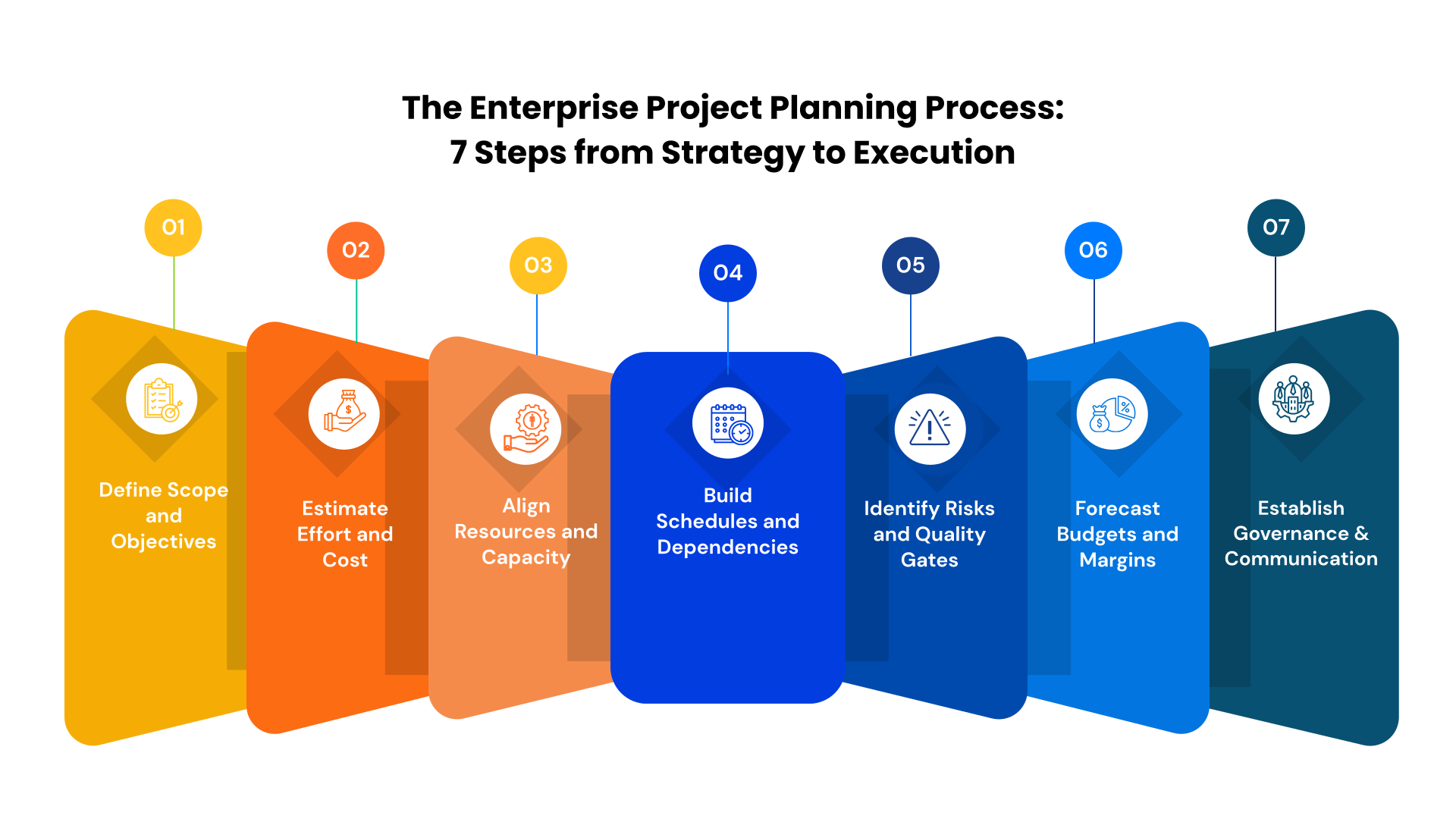
Below are the core stages that define an enterprise-level planning framework:
Scope Definition and Business Alignment:
Every successful plan begins with clarity of scope. This phase involves translating sales commitments into actionable deliverables, identifying dependencies, and aligning outcomes with customer expectations and internal KPIs.
Effort and Cost Estimation:
Using historical data, complexity models, and resource availability, planners forecast effort and costs with greater precision. The accuracy of this step determines both margin predictability and client satisfaction.
Resource and Capacity Planning:
This stage connects project demand with workforce supply. A unified planning view helps allocate the right people to the right projects while balancing utilization across geographies and delivery centers.
Scheduling and Dependency Mapping:
Enterprise projects often involve cross-functional teams, external vendors, and phased deliveries. Dynamic scheduling within project planning software ensures that interdependencies are managed in real time.
Risk and Quality Planning:
Planning is incomplete without anticipating risks and defining preventive measures. Enterprises must embed quality gates, approval workflows, and compliance standards into the plan itself.
Budget Forecasting and Margin Tracking:
Linking planned costs with billing milestones and projected revenue helps maintain profitability visibility across the delivery cycle.
Governance and Stakeholder Communication:
Defining review cadences, escalation paths, and accountability ensures transparent decision-making and controlled execution
When these elements work in tandem, planning transforms from a documentation exercise into an intelligent control system. The goal is no longer to create static plans but to build adaptive frameworks that evolve with changing priorities, capacity, and financial realities—turning every project plan into a live source of enterprise foresight.
Key Challenges Enterprises Face in Project Planning
Even the most mature enterprises struggle to achieve consistent delivery outcomes despite having well-defined methodologies and governance models. The reason often lies in how project planning is approached—not as a continuous, integrated function, but as a one-time setup exercise.
In IT and ITES organizations, project environments are inherently dynamic. Client priorities shift, change requests flow in mid-sprint, and resource availability fluctuates across geographies. Yet, many organizations still rely on fragmented project planning tools or manual spreadsheets that fail to reflect these realities in real time.
1. Inconsistent Estimation Practices:
Without standardized estimation models, teams rely on assumptions or past experience, often leading to effort miscalculations and revenue leakage.
2. Reactive Resource Planning:
When planning and resourcing operate separately, resource shortages or overbookings surface only after execution begins, impacting both quality and timelines.
3. Lack of Financial Visibility:
Finance teams frequently work on outdated data because planned budgets, forecasts, and actuals reside in different systems. This disconnect affects margin predictability and profitability tracking.
4. Poor Change Control:
Version-controlled documents and email-driven approvals make it difficult to trace the impact of scope or budget changes across project dimensions.
5. Siloed Communication:
Critical project updates often remain trapped within specific teams, creating blind spots in governance and stakeholder alignment.
Studies indicate that up to 30% of margin erosion occurs before project execution begins, primarily due to planning gaps and poor visibility. To overcome this, enterprises must transition from traditional planning to adaptive systems that connect people, projects, and financials—enabling every decision to be data-informed, real-time, and business-aligned.
From Static Plans to Intelligent Project Planning
Traditional project planning has always relied on human intuition and experience. While valuable, this approach often limits scalability and precision in enterprise environments where multiple projects, teams, and financials run in parallel. The new era of project planning software is transforming that limitation into opportunity—by infusing intelligence, automation, and adaptability into every phase of planning.
Intelligent project planning moves beyond static schedules and manual reporting. It leverages data-driven insights to forecast resource needs, identify risks before they escalate, and simulate delivery outcomes. By integrating operational, financial, and resource data in real time, enterprises gain a unified, predictive view of every project’s trajectory.
Key differentiators of this evolution include:
- Predictive Forecasting: Machine learning models analyze historical performance to anticipate potential delays, budget overruns, or underutilization.
- Automated Resource Optimization: Advanced algorithms suggest optimal resource mixes, improving utilization rates while reducing burnout and idle time.
- Connected Financial Planning: Real-time linkage between planned costs, actuals, and billing milestones ensures accuracy in revenue recognition and margin control.
- Dynamic Replanning: When client priorities shift or dependencies change, the system automatically recalibrates schedules and allocations without manual intervention.
This new project planning paradigm empowers enterprises to plan with foresight rather than hindsight. It eliminates the traditional lag between planning and execution—replacing reactive reporting with proactive decision-making.
In essence, intelligent project planning turns data into an enterprise asset. It aligns every stakeholder—from delivery managers to finance leaders—around one truth: the ability to anticipate and act is what separates project execution from project excellence.
Critical Capabilities of Enterprise Project Planning Tools
As projects scale in size and complexity, enterprises can no longer rely on generic systems or spreadsheets to plan and govern delivery. Effective project planning tools must function as the command center—connecting people, processes, and performance under one framework. For IT and ITES organizations managing distributed teams, global clients, and time-sensitive deliverables, the right platform defines the difference between control and chaos.

Below are the capabilities that distinguish true enterprise-grade project planning software from basic task management tools:
- Centralized Work Breakdown Structure (WBS):
Enables multi-level planning, linking deliverables, dependencies, and milestones for complex, multi-phase projects. - Skill-Based Resource Allocation:
Matches the right talent to each task based on skills, experience, and availability—maximizing billable utilization while ensuring delivery quality. - Integrated Financial Planning:
Aligns planned budgets, forecasted revenue, and actual spend in real time to safeguard project margins and improve cash flow visibility. - Multi-Currency and Multi-Entity Support:
Ensures accurate financial management across geographies and business units—a critical need for global service providers. - Risk and Compliance Tracking:
Embeds audit trails, approval workflows, and quality metrics directly into the planning process for stronger governance. - Advanced Analytics and Dashboards:
Delivers planned vs. actual performance insights across schedule, cost, and resource metrics for data-driven decisions. - AI-Driven Recommendations:
Provides proactive alerts and corrective action suggestions when deviations occur in effort, cost, or utilization.
Modern enterprises need project planning tools that think as fast as they execute—tools that automate administrative work, surface hidden insights, and empower leaders to manage projects with precision, accountability, and foresight.
The Shift Toward Predictive and Autonomous Planning
The next frontier in project planning is not just digital—it’s predictive and autonomous. As enterprise project environments become more complex, relying solely on manual inputs or static templates limits agility. The modern approach, often referred to as new project planning, combines predictive intelligence, automation, and agentic AI to create plans that evolve in real time.
Predictive planning uses machine learning and advanced analytics to identify potential risks or deviations long before they impact outcomes. For instance, it can forecast if a project is likely to miss its delivery window based on current progress trends or highlight underutilized skills that could be reallocated to high-demand projects. This foresight helps decision-makers act early rather than react late.
Autonomous planning takes it a step further. Here, project planning software doesn’t just report risks—it initiates corrective action. The system can automatically adjust timelines, reassign resources, or rebalance workloads based on pre-set governance rules. This turns planning into a self-regulating process, reducing dependency on manual oversight while improving accuracy and speed.
In enterprise ecosystems, where multiple projects run simultaneously across geographies, predictive and autonomous planning ensures resilience. It keeps every delivery aligned with changing business goals, financial forecasts, and client expectations—making agility a built-in capability rather than a crisis response.
This evolution in planning marks the true maturity of enterprise project management—where intelligence drives precision, and foresight becomes the new foundation for operational excellence.
Best Practices for Enterprise Project Planning
For IT and ITES enterprises, project success depends not only on execution excellence but also on how intelligently projects are planned. The following best practices help organizations strengthen their project planning process, align teams across functions, and sustain profitability in dynamic delivery environments.
1. Integrate Front and Back Offices:
Align CRM, HR, and financial systems to ensure sales commitments, resource availability, and budget forecasts are visible within a single planning ecosystem. This integration bridges the gap between promise and delivery.
2. Standardize Estimation Frameworks:
Use consistent estimation templates and data-driven models to forecast effort, cost, and duration. Standardization minimizes subjective assumptions and improves accuracy across global projects.
3. Plan for Agility, Not Perfection:
Instead of rigid plans, build flexible frameworks that allow dynamic scheduling and real-time adjustments when priorities change or dependencies shift.
4. Leverage Predictive Dashboards:
Adopt project planning software that provides insights into planned versus actual performance—helping leadership make informed decisions quickly and confidently.
5. Embed Governance from the Start:
Integrate approval workflows, audit trails, and compliance checkpoints into the planning phase to avoid governance bottlenecks during execution.
6. Connect Resource and Financial Planning:
Link utilization, billing milestones, and cost tracking within the same ecosystem to ensure profitability and resource efficiency are planned—not discovered later.
By turning these best practices into everyday habits, enterprises can elevate project planning from a static administrative step to a continuous business discipline—one that drives predictability, transparency, and sustained growth.
Conclusion: Plan Once, Align Always
Enterprises today operate in a landscape defined by complexity, distributed teams, and constant change. Amid this, the true differentiator between successful and struggling organizations lies not in their execution speed, but in the strength of their project planning foundation.
Planning is no longer about preparing documents or timelines—it’s about creating alignment. Alignment between what the business promises, what teams can deliver, and what financial outcomes are expected. When enterprises treat planning as a continuous, intelligence-driven function rather than a preliminary step, every project becomes a reflection of strategic intent and operational precision.
The rise of new project planning powered by predictive analytics, automation, and unified data ecosystems is redefining how enterprises operate. By connecting opportunity, resources, and results in real time, organizations can ensure every project starts with clarity, adapts with agility, and ends with measurable success.
Modern project planning software enables this transformation—helping enterprises move from reactive management to proactive governance. The message is clear: plan once, align always, and let every project become a step toward long-term business excellence.