
Key Takeaways
What is Enterprise Project Portfolio Management (EPPM)?
A centralized, enterprise-grade approach to align projects with strategy while unifying people, projects, and financials.
Why can’t enterprises rely on siloed tools?
They create inefficiencies, misalignment, compliance risks, and poor visibility.
What are the core elements of EPPM?
Governance, prioritization, resource planning, and performance analytics.
What are the steps to implement EPPM?
Define strategy, set governance, prioritize projects, plan resources, deploy software, and optimize.
What are the benefits of AI-enabled EPPM software?
End-to-end visibility, predictive insights, smarter utilization, compliance, and financial control.
How does Kytes AI-enabled PSA+PPM software support EPPM?
Through best-in-class dashboards, AI-driven allocation, integrated financials, predictive analytics, domain expertise, and enterprise-grade support.
Why is EPPM critical for CXOs?
It provides foresight, control, and confidence to scale responsibly and profitably.
Every project management tool claims to be the best enterprise project portfolio management software—until enterprises discover that what works for small teams rarely scales for enterprise-grade operations.
Tools that promise efficiency can create new problems. This happens when they are used in global portfolios, complex governance structures, and detailed compliance needs.
The issue arises from depending on isolated tools to manage enterprise operations. Finance operates on one platform, resources are handled on another, projects are monitored on a third, and executives depend on presentations hastily assembled at the last moment. This disjointed method might offer temporary solutions, but over time it results in misaligned strategies, duplicated efforts, resource conflicts, and diminished financial transparency.
This blog explores Enterprise Project Portfolio Management (EPPM)—what it is, why enterprises need it, the core elements that define it, and how the right systems and data foundation with Kytes AI-enabled [PSA+PPM] software can unify people, projects, and financials into one cohesive system for strategic success.
What is Enterprise Project Portfolio Management?
Enterprise Project Portfolio Management (EPPM) enables enterprises to go beyond individual project execution and focus on enterprise-wide outcomes.
At its foundation, EPPM provides a centralized, enterprise-grade framework to unify projects, resources, and financials under one structure. This integration helps organizations align initiatives with long-term strategy, while also optimizing the way resources and budgets are distributed across the portfolio.
Unlike traditional project management, which often zeroes in on scope, schedules, and tasks at a micro level, EPPM introduces a portfolio-level perspective. It connects the dots between diverse initiatives—strategic programs, compliance-driven projects, innovation pipelines—and ensures they all ladder up to business priorities.
This shift is not about replacing project management; rather, it’s about elevating it. With EPPM, CXOs and leadership teams gain the visibility needed to:
- Identify which projects are contributing real value to the business.
- Balance resource allocation across competing priorities.
- Control costs while still enabling innovation and growth.
- Maintain compliance and governance in increasingly regulated environments.
In short, EPPM is how enterprises transform from reactive project execution to proactive, strategy-driven portfolio governance.
Watch how enterprises leverage the intelligently simple Kytes AI-enabled [PSA+PPM] software to align strategy with execution.
Why Enterprises Need Project Portfolio Management
The volume and complexity of initiatives at the enterprise level demand a shift from project-by-project oversight to portfolio-level governance. Digital transformation, regulatory compliance, innovation pipelines, and customer-driven programs all compete for the same limited pool of resources. On paper, each may look well-structured. In reality, overlap, misalignment, and resource strain quickly emerge.
The real challenge lies in the continued dependence on fragmented tools and siloed processes. Finance runs one system, PMOs track another, and resource managers use their own spreadsheets. Data remains disjointed, creating blind spots in planning and execution. The result? Compounding delays, escalating costs, compliance risks, and eroded margins.
This is why Enterprise Project Portfolio Management (EPPM) is no longer optional—it is a strategic enabler. By unifying projects, people, and financials into a single framework, EPPM ensures that:
- Strategy and execution remain aligned through enterprise-wide visibility.
- Resources are optimized to minimize idle time and overutilization.
- Financial health is safeguarded by preventing revenue leakage and overruns.
- Governance and compliance are embedded into every stage of delivery.
For CXOs, EPPM provides foresight instead of hindsight, enabling leaders to steer growth responsibly while protecting margins and compliance standards.
The Case for EPPM
For CXOs, EPPM is not simply an operational upgrade—it is a strategic enabler. By unifying people, project, and financial management into a single framework, EPPM ensures that:
- Strategy and execution are connected – Every project is evaluated not just on feasibility, but on its alignment with enterprise goals.
- Resources are optimized – Capacity planning moves from guesswork to foresight, with the right skills deployed at the right time.
- Financial performance is safeguarded – Revenue leakage, bench costs, and inefficiencies are identified and controlled early.
Governance is embedded – Standardized policies and audit-ready workflows make compliance seamless.
CXO Perspective
From the boardroom’s vantage point, EPPM provides the clarity and control needed to scale responsibly. Instead of reacting to issues after they occur, leadership gains real-time foresight into risks, opportunities, and performance trends. This enables proactive interventions—whether reallocating resources to priority programs, accelerating go-to-market for high-value initiatives, or pausing low-yield projects before they consume more investment.
In essence, EPPM replaces scattered oversight with unified governance, giving enterprises the ability to grow with both speed and discipline.
See how this leading GCC ensured accurate cost accrual and revenue recognition with Kytes AI-enabled [PSA+PPM] software.
Core Elements of Enterprise Project Portfolio Management
Building an enterprise-wide project portfolio management framework requires more than just visibility into projects. It requires structure, governance, and discipline—woven across people, processes, and financials. At the CXO level, four elements stand out as essential to creating a resilient and scalable EPPM practice.

1. Governance & Compliance
Enterprises cannot afford ambiguity in decision-making. EPPM introduces enterprise-grade governance models that define roles, responsibilities, and approval workflows. This ensures that every initiative is monitored against policies, risk controls, and compliance frameworks—whether industry-specific (like GxP in pharma) or internal audit standards.
2. Prioritization & Strategic Alignment
Not every project deserves equal investment. With limited resources and growing competition, leaders need frameworks to objectively prioritize initiatives based on business value, ROI potential, and strategic impact. EPPM provides that structure, ensuring funding and talent flow toward programs that deliver maximum outcomes.
3. Resource & Capacity Planning
Human capital is often the largest line item in enterprise budgets. Without visibility, resources are either underutilized or overextended. EPPM solves this by providing a portfolio-wide view of workforce capacity—matching skills to demand, balancing workloads, and reducing idle or bench time.
4. Performance Monitoring & Analytics
EPPM doesn’t stop at planning. It embeds real-time performance monitoring, tracking KPIs, costs, risks, and delivery timelines across the portfolio. With advanced analytics, leadership can evaluate actual vs. planned performance and pivot strategies before problems escalate.
Together, these four elements transform projects into a cohesive enterprise portfolio, ensuring every initiative drives measurable impact.
Benefits of AI-Enabled Enterprise Project Portfolio Management Software
Global portfolios, distributed teams, and stringent compliance requirements make it impossible for enterprises to rely on spreadsheets or legacy tools. To keep pace, leaders are turning to AI-enabled EPPM software that brings automation, intelligence, and enterprise-grade integration.
1. End-to-End Visibility
Unified dashboards consolidate project, resource, and financial data—providing leadership with a single source of truth and eliminating blind spots.
2. Predictive Intelligence
AI models forecast demand, detect risks early, and simulate “what-if” scenarios—transforming leadership decision-making from reactive to proactive.
3. Smarter Resource Utilization
With workforce insights at scale, enterprises can assign the right people to the right projects at the right time, improving billability and reducing bench costs.
4. Faster Decision-Making
Role-specific dashboards replace manual reporting delays, giving executives instant clarity on utilization, costs, risks, and delivery status.
5. Enhanced Compliance & Governance
Automated workflows embed compliance standards and governance models, ensuring organizations stay audit-ready at all times.
6. Financial Control & Margin Protection
Integrated financials—covering revenue recognition, billing, and cost variance analysis—protect profitability while scaling delivery.
Steps to Implement Enterprise Project Portfolio Management
Adopting Enterprise-grade Project Portfolio Management Software is not a single action—it is a transformation journey. Success depends on building a structured pathway that connects strategy, governance, technology, and culture. For leadership teams, the following steps define a practical roadmap to enterprise-wide adoption.
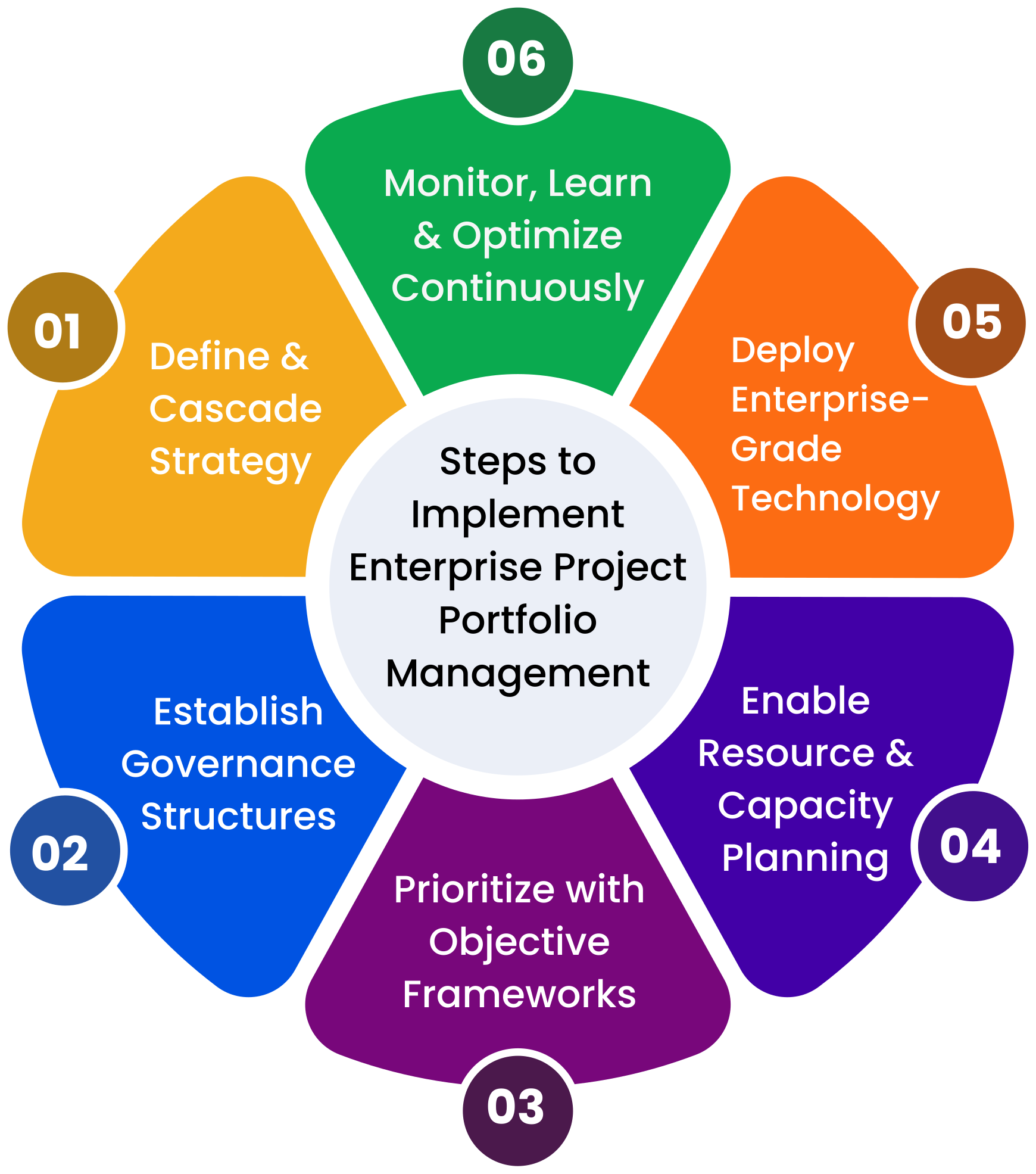
1. Define and Cascade Strategy
EPPM begins with clarity. Enterprises must articulate strategic goals and translate them into measurable project objectives. This ensures every initiative is evaluated not only on feasibility but also on its contribution to long-term business priorities. By cascading strategy into execution layers, organizations create alignment from the boardroom to delivery teams.
2. Establish Governance Structures
A portfolio approach requires more than visibility—it requires discipline. Governance models define decision rights, approval workflows, escalation protocols, and compliance checkpoints. When standardized across portfolios, governance ensures transparency, consistency, and accountability at every stage of delivery.
3. Prioritize with Objective Frameworks
Enterprises rarely suffer from too few ideas; the challenge lies in choosing the right ones. Scoring models and evaluation frameworks enable leaders to rank initiatives based on business value, ROI potential, compliance necessity, and risk exposure. This structured prioritization prevents resource dilution and ensures focus on high-impact programs.
4. Enable Enterprise-Wide Resource and Capacity Planning
Human capital is both a strategic asset and a cost driver. Effective EPPM requires visibility into resource capacity across geographies, business units, and functions. By balancing demand with available skills, enterprises avoid underutilization, reduce overcommitment, and enhance overall productivity.
5. Deploy Enterprise-Grade Technology
Technology is the foundation that unifies people, project, and financial management. Implementing a platform like Kytes AI-enabled PSA+PPM software ensures that data flows seamlessly across portfolios. End-to-end integration eliminates the inefficiencies of siloed systems while delivering AI-driven forecasting, resource optimization, and real-time portfolio insights.
6. Monitor, Learn, and Optimize Continuously
EPPM is not a one-time implementation; it is an evolving practice. Regular reviews of performance metrics, resource utilization, and financial outcomes provide insights for continuous improvement. By leveraging analytics and predictive intelligence, leadership can refine processes, adapt to new priorities, and build resilience into portfolio governance.
When these steps are executed systematically, enterprises move from fragmented project oversight to enterprise-grade portfolio management—achieving clarity, control, and confidence in delivering strategic outcomes at scale.
How Kytes AI-enabled PSA+PPM Software Powers EPPM
While the principles of Enterprise Project Portfolio Management (EPPM) are universal, execution depends on having the best-fit technology to unify people, projects, and financials. Many enterprises attempt to stitch together legacy systems, point solutions, and manual processes, but this approach only reinforces silos and undermines governance. What is required is an enterprise-grade platform built for scale, intelligence, and wide adoption.
This is where Kytes AI-enabled PSA+PPM software becomes a differentiator. Designed to support complex, multi-portfolio environments, Kytes offers an end-to-end system that integrates strategy, delivery, and financials into one seamless platform. The result is a single source of truth that empowers leaders with clarity, foresight, and control.
Portfolio Dashboards for Enterprise Visibility
Kytes delivers executive dashboards that provide a 360° view of portfolios across geographies, functions, and business units. Leaders no longer rely on fragmented reporting. Instead, they access real-time insights into performance, risks, and financial health, ensuring decisions are made with confidence.
AI-Powered Resource Allocation
One of the biggest challenges in EPPM is optimizing workforce capacity. Kytes uses AI to intelligently match skills to project demand, ensuring the right people are deployed to the right initiatives. This reduces idle time, minimizes overutilization, and enhances billability—protecting both productivity and margins.
Financial Governance and Compliance
Kytes integrates financial management directly into the project portfolio framework. From revenue recognition to billing accuracy and cost variance analysis, enterprises gain end-to-end financial control. Built-in compliance features ensure that organizations remain audit-ready and aligned with both internal and external standards.
Predictive and Prescriptive Insights
Beyond traditional reporting, Kytes leverages AI to provide predictive and prescriptive analytics. Leaders can anticipate risks before they materialize, explore “what-if” scenarios, and make proactive adjustments to portfolio strategies. This intelligence-driven foresight is what differentiates best-in-class EPPM practices from reactive project oversight.
Enterprise-Grade Simplicity for Wide Adoption
Technology is only effective if it is adopted across the organization. Kytes is built with enterprise-grade simplicity, enabling project managers, resource leads, and executives to work within the same system without complexity barriers. This ensures wide adoption and eliminates the inefficiencies of siloed tools.
Deep Domain Expertise
Kytes is not a generic platform; it has been purpose-built with a strong foundation of domain expertise across industries such as IT/ITES, pharmaceuticals, engineering, and professional services. This domain knowledge ensures that workflows, compliance frameworks, and reporting structures are aligned to the realities of each sector—giving enterprises a solution that feels tailored rather than off-the-shelf.
End-to-End Support
Successful EPPM adoption goes beyond technology deployment. Kytes provides end-to-end enterprise-grade support—from configuration and implementation to training, integration, and ongoing optimization. This ensures that enterprises not only adopt the platform but also maximize its value over time, building resilience and agility into their portfolio practices.
Driving Enterprise Success with EPPM
As enterprises scale, the real challenge is not delivering more projects but ensuring every initiative aligns with strategy, resources are optimized, and financial outcomes stay protected. The question leaders must ask is: without enterprise project portfolio management, how long can fragmented oversight sustain growth?