
Blog Highlights
Q1. Why are conventional project management tools falling short today?
They are siloed, reactive, and lack the intelligence needed for real-time visibility and control.
Q2. What makes AI project management software different?
It delivers predictive insights, automates workflows, and enables proactive decision-making across the project lifecycle.
Q3. What should enterprises look for in top AI project management tools?
An integrated, enterprise-grade platform offering predictive analytics, resource optimization, financial automation, and compliance-ready workflows.
Q4. How does AI improve project financials?
By automating timesheets, billing, and revenue recognition—leading to faster closures and fewer errors.
Q5. What measurable benefits can businesses expect?
Higher utilization, reduced delays, stronger compliance, and better margins through real-time intelligence.
Q6. Why is enterprise-wide adoption critical?
AI delivers maximum value when it eliminates silos, creates a single version of truth, and scales seamlessly across teams.
AI in project management has dominated conversations for years, often surrounded by more buzz than substance. But in 2025, the discussion has shifted from theory to tangible business outcomes. The organizations leading today are not simply the ones experimenting with AI—they are the ones combining it with the right systems and organized, reliable data to unlock its true value.
In this new era, AI is not a luxury add-on. It is the enabler that helps project-driven businesses anticipate risks, optimize resources, accelerate delivery, and stay compliant in increasingly regulated environments. Without it, projects face familiar pitfalls: delays, revenue leakage, and fragmented visibility.
The real challenge for leaders isn’t deciding whether to adopt AI—it’s choosing the best amongst the top AI project management tools of 2025 that deliver measurable results rather than marketing promises. To bring this into perspective, let’s follow the journey of AcmeTech (name changed) as it navigates the shift from traditional tools to AI-enabled project management with Kytes.
The Story of AcmeTech: A Project-Driven Business at a Crossroads
AcmeTech is a global IT services firm with 5,000 employees spread across North America, Europe, and Asia. Like many project-driven businesses, its revenue model depends heavily on how efficiently it can deliver client projects. On paper, things look strong: a healthy pipeline, seasoned project managers, and long-standing client relationships. Yet beneath the surface, the cracks are showing.
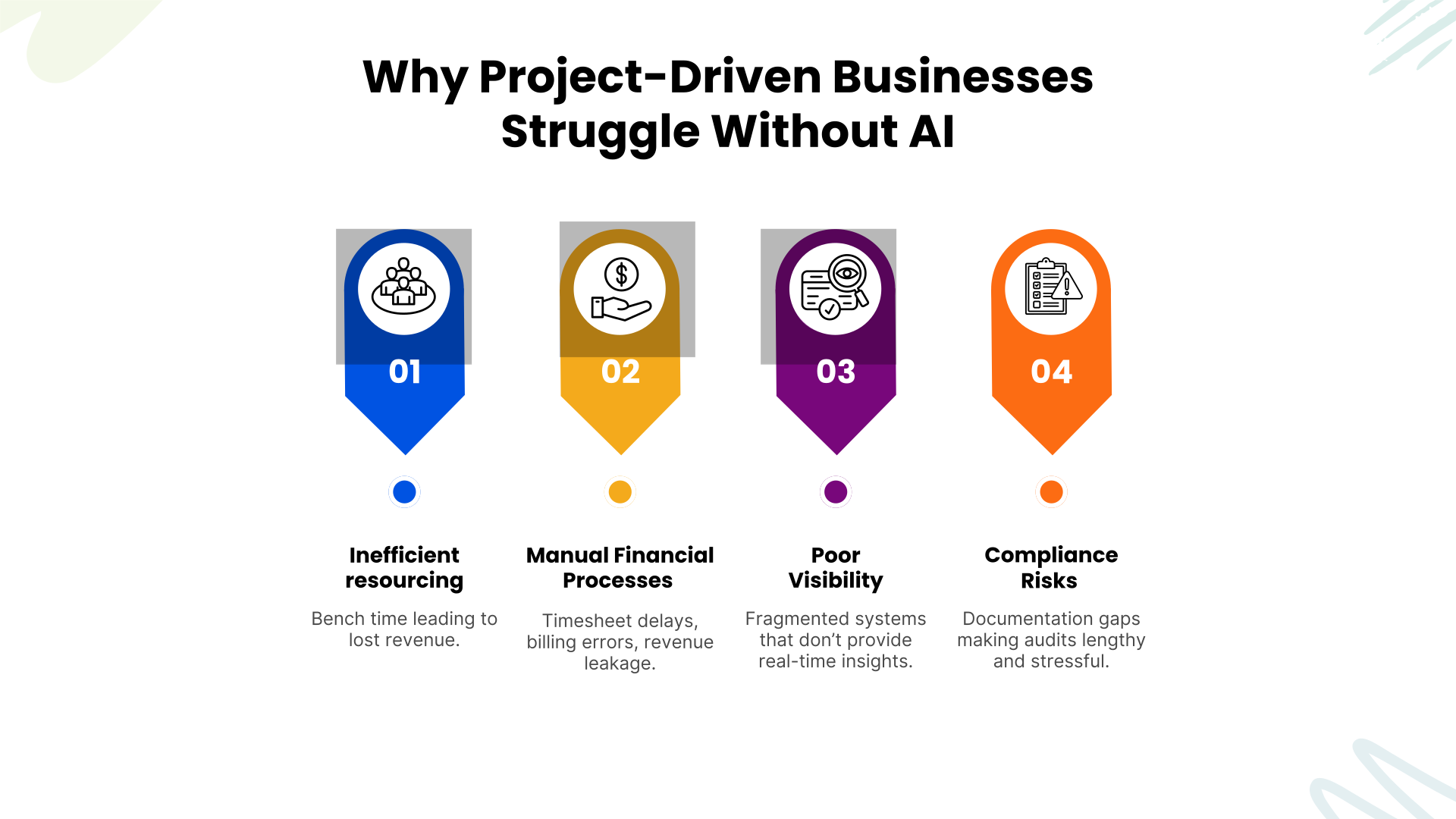
Delivery teams are constantly battling misaligned schedules, delayed client inputs, and hours wasted reconciling spreadsheets. Bench time quietly eats into margins because the right resources aren’t allocated at the right time. Finance struggles with delayed timesheet submissions and billing errors, creating month-end chaos. Compliance audits drag on for weeks because documentation is scattered across silos.
Leaders at AcmeTech know the stakes. Missed deadlines don’t just mean unhappy clients—they mean:
- Lost revenue.
- Strained delivery teams.
- Shrinking profitability.
Despite investing in multiple project management and collaboration tools over the years, they still lack the real-time visibility and intelligence needed to run at scale.
By 2025, AcmeTech found itself at a crossroads. The executive team finally recognizes that traditional tools, no matter how advanced, are not enough. To maintain a competitive advantage, they must explore AI project management software that doesn’t just record project data but actively interprets it, predicts risks, and drives smarter decisions.
Where Traditional Tools Fall Short
For years, AcmeTech relied on a mix of traditional project management tools, spreadsheets, and standalone collaboration apps. These systems worked in isolation, but as the business grew, their limitations became impossible to ignore.
On the surface, the tools tracked tasks, logged hours, and managed deadlines. But in reality, they only told AcmeTech what had already happened—not what was about to go wrong. The result? Leaders were always reacting instead of proactively steering projects.
Key limitations AcmeTech faced with traditional tools:
- Reactive insights, not predictive guidance
Spreadsheets and legacy tools flagged problems only after they occurred. By the time delays or cost overruns surfaced, the damage was already done. - Resource allocation blind spots
Project managers had no way to match skills to project requirements in real time. Bench time went unnoticed until profitability reports revealed losses. - Siloed financial tracking
Timesheet submissions and approvals ran on email chains. Billing errors accumulated, revenue recognition was delayed, and finance teams struggled to close books on time. - Compliance gaps
Regulatory documentation was scattered across different systems, creating audit stress and risk of non-compliance. - Poor executive visibility
Leadership lacked a single source of truth. Different departments used different tools, making it hard to align delivery, finance, and resource planning.
For AcmeTech, these issues compounded into missed deadlines, dissatisfied clients, and shrinking margins. The leadership team realized that simply upgrading to “newer” versions of the same tools wouldn’t solve the underlying problem.
The challenge here isn’t just about digitizing project data. It was about empowering project leaders with intelligence—predictive, actionable, and real-time—to move from firefighting to foresight. That required more than fragmented tools. It called for an integrated platform that eliminates silos and creates a single version of truth, purpose-built for enterprise-grade operations yet simple enough for enterprise-wide adoption. By enabling end-to-end digitization and automation of the entire project lifecycle, AI project management software began to emerge as a true game-changer.
What To Expect from Top AI in Project Management Tools in 2025
When AcmeTech’s leadership decided to evaluate AI-driven platforms, they quickly realized an important truth: not every software with “AI” stamped on it was truly intelligent. Many offered surface-level automation—automated reminders, smart tagging, or task scheduling—but lacked the depth needed to tackle enterprise-scale challenges. To separate real value from marketing buzz, AcmeTech focused on what an enterprise-grade AI project management software should deliver.
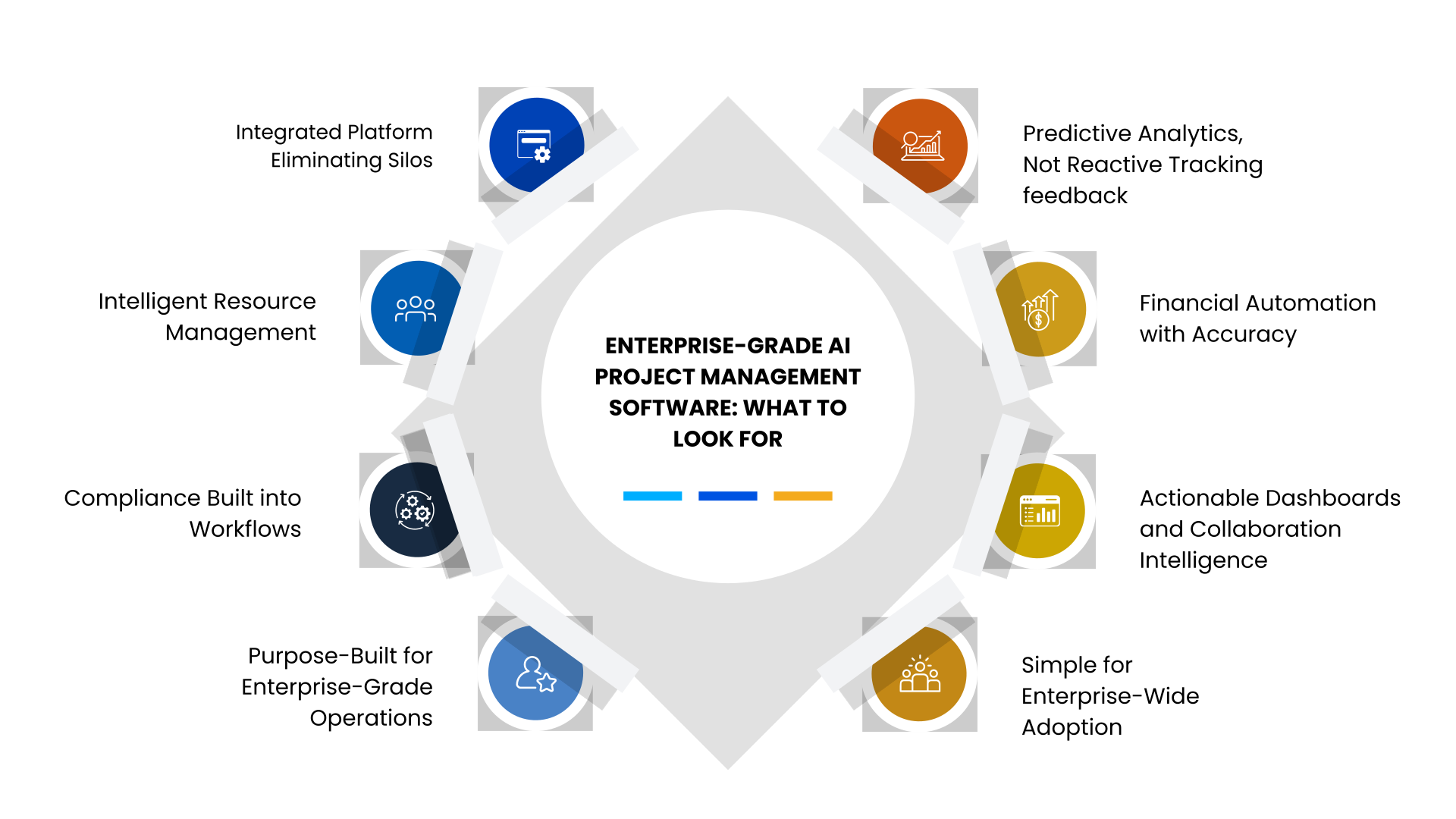
1. Predictive Analytics, Not Reactive Tracking
Instead of waiting for problems to appear in status reports, AI learns from historical data and ongoing project signals to forecast risks, delays, and budget overruns. For AcmeTech, this meant identifying at-risk projects weeks earlier and rebalancing timelines before clients were affected.
2. Intelligent Resource Management
AI matched skills, availability, and location with project needs. This eliminated costly bench time and ensured the right people were assigned to the right projects. AcmeTech saw immediate potential in reducing idle resources while improving utilization rates.
3. Financial Automation with Accuracy
From timesheet capture to automated billing and revenue recognition, AI removed manual errors and accelerated month-end closures. For AcmeTech’s finance team, this meant fewer disputes, cleaner audit trails, and predictable cash flows.
4. Compliance Built into Workflows
In regulated industries, missing a single approval can lead to costly escalations. AI-enabled stage-gates, approval trails, and automated documentation helped AcmeTech ensure that compliance was no longer an afterthought—it was built into the project lifecycle.
5. Actionable Dashboards and Collaboration Intelligence
Executives no longer had to sift through static reports. AI dashboards highlighted what mattered most—margin trends, resource heatmaps, project health scores. Collaboration tools even generated meeting summaries, assigned tasks automatically, and flagged accountability gaps.
For AcmeTech, this shift was eye-opening. They no longer looked at AI as an add-on, but as a strategic enabler that could unify projects, people, and profit. The evaluation phase made one thing clear: adopting AI wasn’t about doing the same things faster—it was about doing them smarter.
Evaluation Checklist: How AcmeTech Chooses the Best AI Software
With dozens of platforms marketing themselves as “AI-powered,” AcmeTech knew it couldn’t afford to be swayed by glossy demos or buzzwords. The executive team created a structured evaluation checklist to ensure they selected a solution that would drive measurable impact—not just short-term automation.
Here’s what their decision framework included:
Scalability & Enterprise Readiness
Could the platform handle global delivery across multiple geographies, currencies, and contract types?
Depth of AI Capabilities
Was it limited to basic automation (reminders, task scheduling), or did it offer predictive and prescriptive insights that could guide strategic decisions?
Integration with Core Systems
Seamless connectivity with ERP, CRM, HRMS, and collaboration tools was critical to avoid yet another silo.
Data Quality & Security
AI is only as strong as the data it learns from. AcmeTech prioritized solutions that ensured clean, accurate data pipelines with enterprise-grade security.
User Experience Across Roles
Would project managers, finance teams, and executives all adopt it? The team ruled out tools that were too complex or lacked role-based dashboards.
Compliance & Governance
Built-in stage-gates, approval trails, and regulatory-ready audit logs were mandatory.
By using this framework, companies can filter out tools that offer shiny features but lack depth. For AcmeTech, the selection process wasn’t just about choosing a tool—it was about investing in an AI-enabled foundation for the next decade of project delivery.
Fast Forward: AcmeTech After AI Adoption
Eighteen months after adopting an enterprise-grade AI project management platform, AcmeTech’s operations looked very different. The shift wasn’t just technological—it was cultural. Teams no longer spent their days firefighting; instead, they operated with foresight, supported by real-time intelligence.
The measurable outcomes were clear:
Increase in billable utilization
Smarter skill-to-project matching reduced bench time and ensured resources were deployed where they added the most value.
Reduction in project delays
Predictive alerts helped project managers act before risks turned into escalations. Clients noticed—and satisfaction scores improved.
Faster financial closures
Automated timesheet capture, billing accuracy, and revenue recognition gave the finance team the ability to close books with confidence and speed.
Stronger compliance posture
Audit trails and stage-gates ensured regulatory reviews no longer created bottlenecks or last-minute scrambles.
Executive confidence through visibility
Dashboards offered leaders real-time clarity on margins, delivery health, and resource performance—no more waiting for monthly reports.
For AcmeTech, the biggest win was intangible: a mindset shift. Project managers trusted AI to handle repetitive tasks and highlight risks, freeing them to focus on strategy, innovation, and client relationships.
What started as a response to inefficiencies became a competitive differentiator. The company no longer viewed AI as a supporting tool, but as a strategic partner in scaling growth and profitability.
Trends Shaping AI Project Management in 2025
Project-driven businesses are moving past isolated automation and into a new era where AI becomes the core fabric of project delivery. Several trends are defining this transformation in 2025:
1. Agentic AI for Autonomous Orchestration
AI is no longer limited to predictions—it now takes autonomous corrective actions. From rescheduling tasks to reallocating resources, agentic AI reduces manual interventions and accelerates decision-making.
2. Hybrid Methodology Enablement
Enterprises rarely run all projects on Agile or Waterfall alone. Modern AI project management software enables seamless switching between methodologies, applying governance to regulatory projects while keeping innovation cycles agile.
3. AI-Powered Collaboration Assistants
Meeting fatigue is real. AI copilots now transcribe discussions, generate minutes of meeting (MoM), and assign tasks automatically. This eliminates gaps between decisions made in meetings and actions taken afterward.
4. Financial Intelligence at Scale
CFOs are turning to AI for revenue recognition, variance tracking, and anomaly detection. By preventing revenue leakage and ensuring billing accuracy, AI directly strengthens profitability.
5. Sustainability and ESG Integration
Forward-looking companies are embedding ESG metrics into project portfolios. AI tracks carbon impact, compliance with sustainability regulations, and supplier ethics, aligning projects with long-term corporate responsibility.
For leaders, these trends highlight a simple truth: AI tools for project management are no longer about efficiency alone—they’re about strategic advantage. The companies that adopt them now will set benchmarks for speed, compliance, and profitability in the years ahead.
Final Thoughts
The lesson for enterprises is clear: in 2025, AI is no longer a buzzword—it is a strategic edge. But not all platforms deliver the same value. Leaders need solutions that unify projects, people, and profitability on a single connected system while embedding predictive and autonomous intelligence into daily workflows.
That’s where Kytes AI-enabled [PSA+PPM] Software makes the difference. Built for enterprises that run complex, project-driven operations, Kytes brings together delivery, resources, and financials into one platform—powered by Agentic AI. The result? Smarter allocation, accurate financial governance, and proactive risk management, all designed to scale with business needs.
For organizations ready to stay ahead, the next step is not about asking why AI? but rather how soon can we enable it? Those who act now will define the standards of efficiency, compliance, and profitability in the years ahead.