
Blog Highlights
- Project budgets define the financial structure required to deliver a project successfully.
- Cost tracking helps organizations monitor actual spending against planned budgets throughout the delivery lifecycle.
- Real-time financial visibility enables teams to detect budget deviations early and take corrective action.
- Platforms like Kytes help organizations move from reactive financial tracking to predictive and prescriptive project financial management.
IT services organizations operate in an environment where delivery performance and financial performance are tightly connected. Projects drive revenue, resource utilization determines margins, and financial visibility determines long-term profitability.
Despite this reality, many organizations struggle to maintain clear visibility into project budgets and cost behavior once delivery begins. Initial budgets are prepared during planning stages, but tracking how those budgets evolve during execution often becomes fragmented across spreadsheets, timesheet tools, and finance systems.
This blog explores how project budgets can be structured in IT services environments, why cost tracking is essential for financial control, and how modern platforms help organizations manage project financials with precision.
What Is a Project Budget?
A project budget represents the total financial plan required to deliver a project successfully. It estimates the expected cost of all resources, activities, and operational expenses associated with the engagement.
In IT and IT-enabled services organizations, project budgets are primarily driven by resource costs. Developers, consultants, analysts, designers, and project managers contribute effort throughout the delivery lifecycle, and each role carries a defined cost structure.
However, labor costs are not the only financial component involved. A complete project budget typically includes several cost categories.
- Resource Costs
These represent the cost of internal or external resources contributing to project tasks. Effort estimates and hourly rates determine this portion of the budget.
- Infrastructure and Technology Costs
Projects may require cloud infrastructure, software tools, testing environments, or data services. These costs must be incorporated into the financial plan.
- Vendor and Third-Party Services
External partners may provide specialized services such as consulting, integrations, or platform support.
- Operational Expenses
Travel, licensing, communication tools, or other operational costs can also influence the final project budget.
When these elements are estimated at the task or deliverable level and then aggregated, organizations obtain a structured financial plan that guides project execution.
A well-defined project budget provides a baseline against which actual costs can be measured throughout the delivery lifecycle.
Why Project Budget Planning Matters
Budget planning plays a critical role in determining whether a project remains financially viable.
Without a structured financial plan, organizations risk committing resources without understanding the true cost of delivery. This uncertainty can affect project profitability, resource allocation, and long-term financial performance.
Several factors explain why disciplined budget planning is essential.
- Financial Visibility
A clearly defined budget provides transparency into the expected cost structure of the project. Delivery leaders and finance teams can evaluate whether the project aligns with profitability expectations.
- Operational Planning
Budget planning ensures that resource requirements and operational costs are understood before delivery begins.
- Risk Management
Projects rarely proceed exactly as planned. Budget planning often includes contingency allocations to account for potential risks such as scope changes or timeline extensions.
- Decision Support
Leadership teams rely on financial estimates when evaluating project opportunities. A detailed budget allows organizations to make informed investment decisions.
Organizations that treat project budgets as a strategic planning tool gain stronger control over project financial performance.
Understanding Cost Tracking in Project Delivery
While budgeting defines the financial plan, cost tracking ensures that project spending remains aligned with that plan during execution.
Cost tracking refers to the continuous monitoring of project expenditures and resource consumption throughout the delivery lifecycle.
For IT services organizations, cost tracking primarily focuses on the relationship between planned costs and actual spending.
- Planned Costs
These represent the financial estimates established during project planning. They define the expected budget allocation for resources, activities, and operational expenses.
- Actual Costs
These represent the real expenses incurred during project execution. Actual costs typically include labor effort recorded through timesheets, vendor invoices, infrastructure charges, and operational expenses.
Comparing planned and actual costs allows organizations to identify financial deviations early and implement corrective actions before those deviations grow into significant budget overruns.This process is commonly known as planned-versus-actual cost analysis. When performed consistently, it provides valuable insights into how project costs evolve over time.
This process is commonly known as planned-versus-actual cost analysis. When performed consistently, it provides valuable insights into how project costs evolve over time.
The Role of Resource Utilization in Project Costs
In IT services environments, human capital represents the largest contributor to project expenses.
This makes resource utilization a central factor in cost tracking.
Every hour a resource spends on a project contributes to the overall cost structure. If actual effort exceeds planned effort, project costs increase accordingly.
For this reason, cost tracking often depends heavily on accurate time reporting and resource allocation monitoring.
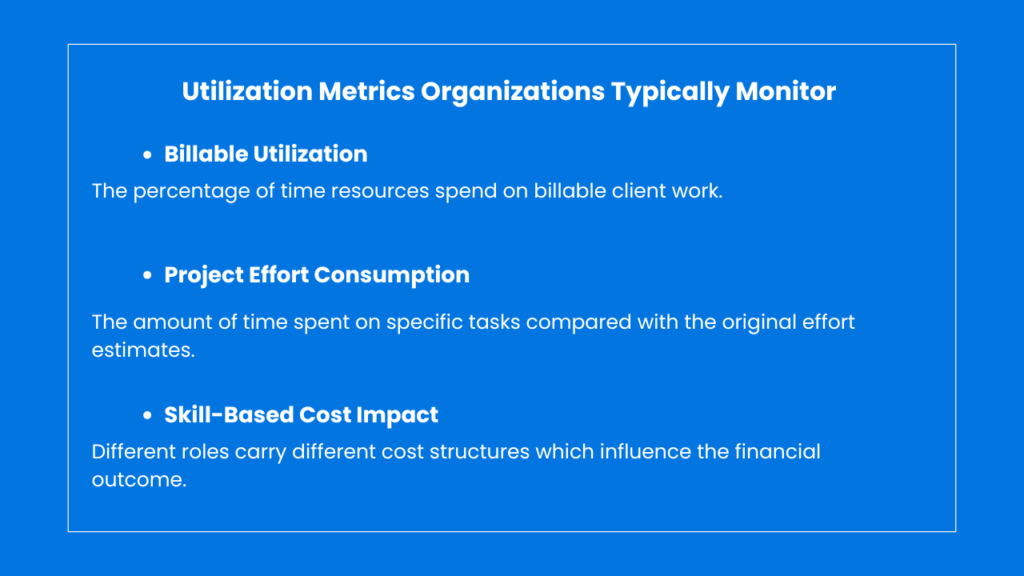
By linking utilization data with project financials, organizations gain deeper insight into how delivery decisions affect project costs.
Real-Time Expense Monitoring
Traditional project financial reporting often relies on periodic updates and manual data consolidation. While this approach provides a historical view of spending, it does not offer timely insight into emerging financial risks.
Real-time expense monitoring addresses this limitation by capturing financial activity as it occurs.
When expenses such as resource effort, infrastructure usage, or vendor costs are recorded continuously, project managers gain immediate visibility into cost behavior.
This visibility allows delivery leaders to detect financial deviations early and adjust resource plans, timelines, or project scope accordingly.
Real-time monitoring also improves collaboration between delivery and finance teams by ensuring that financial data remains consistent across operational systems.
Forecasting Project Financial Performance
Cost tracking does more than measure past spending. It also helps organizations forecast future financial outcomes.
Forecasting involves estimating the remaining cost required to complete a project based on current progress and cost trends.
Project managers often analyze several indicators when forecasting financial performance.
- Remaining Effort Estimates
How much work remains to complete the project deliverables.
- Current Cost Consumption
How quickly the project is consuming the allocated budget.
- Resource Allocation Changes
Whether team composition or workload adjustments will influence future costs.
Accurate forecasting helps organizations anticipate budget risks before they become critical. It also enables leadership teams to evaluate project profitability while delivery is still in progress.
Challenges in Managing Project Budgets and Cost Tracking
Despite the importance of financial control, many IT services organizations encounter operational challenges when managing project budgets and cost tracking.
Several common issues contribute to financial visibility gaps.
- Fragmented Financial Data
Budget estimates, resource plans, timesheets, and expense reports often exist in separate systems. This fragmentation makes it difficult to maintain a unified financial view of the project.
- Manual Reporting Processes
Many organizations rely on spreadsheets to consolidate financial information. Manual reporting increases the risk of errors and slows decision making.
- Delayed Cost Visibility
Without integrated systems, cost deviations may only become visible during periodic reviews. By the time issues are identified, corrective action may be difficult.
- Inconsistent Financial Governance
Different teams may follow different processes for budget planning and cost monitoring, making portfolio-level analysis challenging.
Addressing these challenges requires both structured financial processes and technology that connects project operations with financial management.
Moving From Reactive to Predictive Financial Management with Kytes
Managing project financials across multiple engagements requires more than spreadsheets and manual reporting. When financial data is fragmented across systems, organizations often react to cost overruns only after they occur.
Kytes helps project-driven organizations move beyond reactive financial management.
The platform integrates project budgeting, resource utilization, expense tracking, and financial reporting within a unified environment. This enables delivery leaders and finance teams to monitor project financials continuously and maintain clear visibility into cost behavior.
With centralized financial data and real-time insights, Kytes transforms project financial management from reactive tracking to predictive and prescriptive decision-making. Organizations can anticipate budget deviations earlier, forecast financial outcomes more accurately, and take corrective actions before costs impact project margins.
Instead of responding to financial issues after they surface, delivery teams gain the insights needed to manage project performance proactively.
Conclusion
Project budgets and cost tracking play a central role in the financial health of IT services organizations. Budgets define the financial structure of a project, outlining the expected cost of resources, infrastructure, and operational activities. Cost tracking ensures that these expectations remain aligned with actual spending during delivery.
When organizations implement structured budgeting processes and continuously monitor project costs, they gain stronger control over financial outcomes. This discipline improves margin visibility, strengthens forecasting accuracy, and allows delivery teams to respond quickly to emerging financial risks.
For organizations managing multiple client engagements, effective budget management and cost tracking also provide leadership with a clearer understanding of portfolio performance. Financial visibility ultimately enables better operational decisions, stronger project governance, and more predictable business outcomes.
See how your organization can strengthen project budget management and cost tracking while moving from reactive reporting to predictive and prescriptive financial governance.
Book a Demo